Day 17 July 22 The Denali Highway

Denali Day 17_2125Once again, we are camped within feet of a lake, but this time we are not just dry camping in a primitive campground, we are actually boondocking.  We are just a bit more than 8 miles east of the Parks Highway and Cantwell on the Old Denali Highway 8.  This road continues east to Highway 4, the road to Valdez, and then back north to Delta Junction where we were a few days ago.  I am terribly behind in writing, and it seems the only way to get going again is for me to start with the here and now, this moment.

Denali Day 17_2156Mo is cutting some dead wood nearby along the lakeshore and feeding our campfire while we watch the evening sky shift and change across the lake.  It smells wonderful.  A very occasional car or truck passes our site, but we aren’t really visible until they are almost right on top of us, so that works just fine.  This morning when we drove this highway, for a very long time we were the only ones on the road.

6am on the road into denaliWe began our day in the Riley Creek Campground at Denali National Park, with a 5:30 am drive west on the park road to Savage Creek, the extent where private vehicles are allowed in the park. Except for the green and white shuttle buses, already taking people into the deeper recesses of the wilderness, we were the only ones on the road.  We thought perhapstundra landscape an early morning drive might yield some critter viewing, but it wasn’t to be.  Again, we saw squirrels and snow shoe hares and nothing else.  Unlike yesterday, this morning the Mountain was clouded over and if we hadn’t seen it last night we would have had no idea where it was on the horizon.

The tundra was beautiful at dawn, though, with pale shades of misty green on the high hills to timberline glowing in the morning light.  Once at the parking lot at the Savage Creek trail, we were delighted to be the only ones there.  Rules said that we couldn’t leave Abby untended in the car, and of course she couldn’t go on the trail, so Mo sat with her while I took off on a beautiful, silent walk along the river.  The only sound breaking the silence was the river, the sounds of birds calling, and an occasional rumble as a shuttle bus crossed the bridge to the security point. When Mo was here so many years ago, she was able to drive to a campground farther into the park, but even back then the only animals she saw were a small herd of caribou in the distance.  There are no guarantees that you will see any wildlife at all, even on the bus that travels the entire 85 miles to Wonder Lake. 

Denali Day 17_1954I have a friend, Jeanne, who lived in Alaska for several years and told me we should try the Denali Highway for a true wilderness experience without the crowds of Denali.  So after our morning drive, we packed up the MoHo and headed south on the Parks Highway 3 toward Cantwell and the Denali Highway junction.  Mo checked in with the owner of the Tesoro station at the junction and he said it would be fine to leave the MoHo there while we took the Tracker on the gravel road leading east through the wilderness.

I owe it to Jeanne, because we might not have taken the time and trouble to travel this long gravel road. Even though unpaved, the road was in much better shape than the Top of the World Highway, and we could have driven the MoHo Denali Day 17_1991all the way to the eastern junction with Highway 4 without any problems, I am sure.  We spent many hours on the trip, mostly because I had to keep stopping to take pictures and walk out over the hills for wider vistas.  Along the way, we saw many places that would be perfect for boondocking, but this one at mile 8 was our choice because of the lake and the proximity back to our route on Highway 3 south to Talkeetna  tomorrow.

We drove as far east as the Susitna River crossing where the landscape changed dramatically. This is about the half way mark of the road, and also marks a great landscape shift where the Sustina River flows south to Cook Inlet, and the Nenana River we had been following for many miles flows north into the Tanana River, the Yukon, and eventually the Bering Sea. 

Denali Day 17_2001The reward for our many miles of gravel road highway was the expansive wild Mt Deborahlandscape of the Nenana River valley flowing at the southern base of the Alaska Range. During the morning, on our route east, the skies were clear enough that we could see Mt Deborah and Mt Hess among the rugged peaks of this beautiful range that also is the home of Denali as well. The Susitna River lodge, east of the river, was boarded up, and when we decided to turn back at mile 77 we were starting to get a bit hungry.  Silly me, I was so excited about the trip that I completely ignored the possibility that we might need sustenance, so we had nothing with us.  A few miles west of the river is a tiny enterprise called Gracious House Lodge B&B at historic milepost 82, with the supposedly famous Sluice Box Bar, and a café. 

Denali Day 17_2025We stopped thanks to the handwritten sign on the road proclaiming pie and espresso, but the restaurant was closed and the only pie available was a wondrous creation that had been frozen for $30 bucks each. Denali Day 17_2028

Carol was delightful, and assured me that her pies were world famous, and that if we weren’t outsiders, we would know that they were a deal at any price.  I agreed with her, but still couldn’t quite opt for a 30 dollar pie.  I did buy an espresso for me and a latte for Mo and enjoyed visiting with Carol who told me all about the lodge, the slow summer, the reason for closing the restaurant, and all about her kids, grandkids, and husband.  They have lived here for 31 years, (her husband actually lived her for 55 years), have traveled the Highway to the south five times because they get cabin crazy, and are really wanting to sell the place and leave the wilderness. 

Denali Day 17_2049uhohWith a good jolt of java we continued west, enjoying the views.  For a day or two now, the exhaust pipe on the Tracker has been loose and rattling, and Mo tied it up with a piece of wire till we can get it welded. But the sound we suddenly heard on the gravel road was something new, and Mo pulled out immediately to a beautiful spot overlooking the Nenana River Valley and the Alaska Range to see one of her brand new tires going very flat.  The spare was ready, the lug nuts were loose enough to actually remove, and we got the tire changed without a hitch.  We were both amazed to see that the puncture was caused by the 1/2 inch hitch latch bolt that had run right into the tire.  Who knows how it managed to get in there but it had punctured it and was all the way inside the tire.

the tire repair shopno name tire manWe continued  west back to Cantwell, checking that our chosen boondock site was still unoccupied, and asked the nice Tesoro guy where we could get the tire repaired.  Of course, there was a tire repair shop right in Cantwell, although I say that loosely.  We paid 40 for a used tire and 20 to mount it and it was worth every penny. Especially considering the old man who wandered out of the house to help us.  By the time he was done, Mo knew most of his life story as well.  Folks in Alaska are very friendly it seems, and like having someone listen to them.

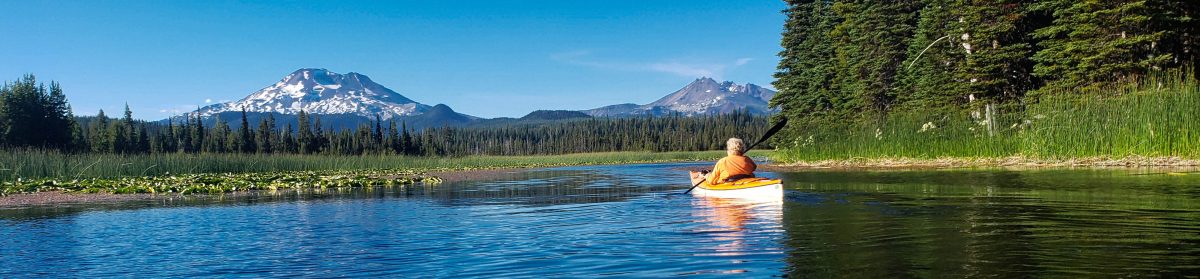
Denali Day 17_2122We picked up the MoHo and drove back to our lake, which I since discovered aka the Milepost, is Joe Lake, used by a local air service, and that our boondock site south of the road can flood. I don’t think that will be a problem tonight.  After our evening kayak, we are still sitting out by the fire with a glass of wine, enjoying the evening unhampered by bugs, wind, or rain.  I somehow never envisioned moments like this when I imagined what this trip would be like.  I was ready for mosquitoes, for rain, for dreary skies, for hordes of other RV’s on the road.  Tonight at least, we have none of that.  Just wilderness all around us, a sky that is many shades of blue and white and gray, a glassy lake all to ourselves, and a free campsite.

Denali Day 17_2085Denali Day 17_2087One last thing.  Erin asked the other day about how I manage the Pelican Waterproof Camera case in the kayak.  First of all, we have Adirondack boats from Swift Canoe in Canada, and bought them specifically for the roomy cockpits so that Mo could paddle with Abby.  For me, that equates to plenty of room for the Pelican.  I lock it up while launching and if the water is smooth, I’ll open it up and can even switch lenses mid stream if needed.  Seems to be a great system and I no longer have to be afraid to take the good camera out on the water. Hmm, that wide angle lens does really great things for my legs.  ewwwww!

CaptureMiles traveled today in the MoHo: 37

Miles traveled in the Tracker on the Denali Highway 150 or so

The rest of the photos for this day are linked here

Day 5 July 10 The Cariboo Highway to the Yellowhead

And no, it isn’t spelled “caribou” as in the animal.

Cariboo Day 5_518 In the late afternoon shadows on Fraser Lake, we were serenaded by the haunting call of the north, the loon.  I have heard their singular cries often on NatGeo specials, listened as some nature photographer captured the essence of wild northern lakes, but it is the first time I have seen a loon up close on the water.  I couldn’t believe how big he was, and how very loud.  He let us get within a few hundred feet while his mate stayed much father away from us.  I didn’t see any little ones, but with the racket dad was making to draw us away from mom,  I wouldn’t have been surprised if they were out there.

Fraser Lak Day 5_530The water was smooth when we launched, but turned rough and windy, so I was glad that I hadn’t brought the good camera.  For now, the point and shoot is all I will take with me in the kayak unless I can be assured all is glassy smooth.  When I heard the loon, I thought I could maybe get a video with sound, and snapped on the baby camera only to get the dreaded message, “Battery Exhausted”.  Sigh.  I had just put in the new battery before we went out in the boats, but with the power shifts and inverter on/off kind of thing, it somehow wasn’t fully charged.  Yeah, I know, always carry a spare, and I did, in the motorhome.  So no photo of the loon couple.

Cariboo Day 5_509It just started raining a bit ago, and the skies are heavy and dark.  We are settled in quietly at Beaumont Provincial Park on Fraser Lake, about 86 miles west of Prince George on the Cariboo Day 5_510Yellowhead Highway.  We landed about 2:30, with plenty of time to take Abby for a swim and then go for a kayak on the lake before supper.  I thought we might be entering the wilderness when we headed west from PG, but not so much. Evidently this string of lakes along the Yellowhead are popular with the local weekend RVing crowd, since there was a long line of rigs returning east on this Sunday afternoon.  Lucky for us it was Sunday, since the park was almost empty and once again our no-reservation plan is working.  Camping here along the lake is 16 Canadian dollars, for a spot and no hookups, but it is lovely.

Today was my turn to drive, and we actually got out of Clinton at 7:30 this morning, knowing we had a long driving day planned.  I am sure there are sights to be seen along the Cariboo Highway, 97 north, the Gold Road as they call it, but we still are pushing to get north.  I think now we are north enough to move a bit more slowly.  The 335 miles that we logged today covered long straight miles of gorgeous road, much of it newly developed 4 lane highway, smooth as silk and no traffic at all. I am sure we are leaving all that silky road behind us before long, so I appreciated it a lot today.

Cariboo Day 5_487I lived in Prince George for a few months in 1973, and drove there in a very old car with my 4 babies on a long winter night in January. That is another long story that probably will never get told, but I couldn’t help comparing that drive to the one today in utter luxury. In those days I think the road must have been wilder and more terrifying, the wilderness was everywhere.  My first taste of wilderness today was the sound of that loon. 

Cariboo Day 5_500But this morning the sun was shining when we left Clinton.  The one stop that drew us in was the Heritage Display at 108 Mile House. the information center and museum were still closed, but we did enjoy walking around the grounds and admiring the beautiful log buildings that have been so lovingly restored. The “houses” along the Cariboo Highway were developed during the gold rush and gave the weary miners safety, shelter, a bed and some food along the way north.  Still called 100 Mile House, 133 Mile House, 150 Mile House, I’m glad they didn’t try to change the house to something or other Meter House!

Cariboo Day 5_492Since I was driving today, there are fewer photos, and the few times I really wanted to stop for some shots of the flooding Fraser River there absolutely wasn’t a single place to pull off.  The Fraser is a magnificent river, draining the Fraser Plateau all the way to the Pacific Ocean, with a rich and wild history from the fur trappers to the present day.  It was chocolate brown and angry today, filled to the banks from all the recent flooding in the northern part of BC, and carrying all sorts of logs and debris torn from the riverbanks.  It was exciting just to see it.

We crossed the Quesnel River and the drove beside the Fraser through the cute little town of Quesnel.  I remember when I lived in Prince George that I wished we could live in Quesnel.  I had no desire to try to see anything in Prince George.  My memories there weren’t especially good, and the town has quadrupled in size since those days.  I was happy to just drive on the outskirts, hook up to Highway 16 and skip the whole thing.  This is a trip about going north, about wilderness where we can find it, about silence and solitude and big landscapes, not about towns.

Cariboo Day 5_513The rain has stopped, Mo is reading while I write, and I am wondering how long the evening will stay light.  Even with the dark overhanging clouds, I don’t expect darkness to fall anytime soon.  We are glad for the light darkening shades that we have throughout the MoHo, and I think they will come in handy as we continue north.

Cariboo Day 5_522 I don’t have an internet connection tonight, so can’t spend a lot of time looking up things like weather, sunset and sunrise times, or reading blogs and my only job is to write this piece and then drop into bed and try to remember what I was last reading on the Kindle.  Actually, the Kindle remembers for me, good thing, since there are a lot of books that I loaded up before taking off on this journey and I haven’t had a moment to pick it up since we started.

Tomorrow: Smithers and on to the Cassiar Highway

clinton to fraser lakeMiles traveled today: 335

The rest of the photos for this day are linked here

Day 3 July 8 Toppenish to the Okanogan Wine Country

Washington Day 3_340It’s easy to be inspired this evening as I sit here looking out over the Okanogan River from our picnic table.  This is our third night out, with no reservations, a Friday night at that, and so far it has been great.  Tonight we are at the Osoyoos Lake State Park in Oroville, Washington, less than five miles from the Canadian border. The state of Washington turned over this park to the city of Oroville in 2010, so it is technically no longer a state park, but it is lovely nonetheless.

Washington Day 3_282We have no hookups, but it isn’t really boondocking, since we paid for a site on the river and are in a campground.  There are no hookups here at all, but there is a dump station, fresh water, a boat launch and lovely facilities if you need them. After driving a good portion of the day we thought it would be smart to relax with a bottle of wine and a good night’s sleep before we cross the border in the morning. The bottle of wine was a treat, provided by the small, intimate tasting room for Okanogan wines right in the little town of Oroville.

Washington Day 3_320When we arrived at the park, the sign was up saying “campground full” , but we thought we would check anyway, and sure enough there had been cancellations and there was a perfect space waiting for us.  Without hookups, setting up consisted of setting the parking brake, lowering the semi automatic levelers, and deploying the slide.  Within minutes we were headed back to town to the winery looking for a good bottle of red to celebrate before we entered Canada. We weren’t disappointed, with a lovely 2006 blended red called Bench Rock, and a bottle of crisp dry Riesling to travel with us tomorrow.

Washington Day 3_275There were some lovely folks in the small tasting room from Canada, who helped us better understand the Imperial Ounce and Liter requirements for bringing alcoholic beverages into the country.  Two bottles of wine or 24 bottles of beer each, or one bottle of wine and 12 beers.  What we hadn’t realized is that is for each person, so we could buy a bottle of wine for supper and still take another into the country to travel with us across the wilderness.

Our morning started with a bang, with no turn signals on the tow car. Mo scratched a bit at the terminals, and then we pulled into the casino across the street from our campground and dug out the owner’s manual. Mo has a nice little box with a gazillion different fuses, and with the diagram and the box of fuses we were fixed in no time. Just a blown fuse, but that can be a nightmare if you don’t have a clue where it goes.

Washington Day 3_262Washington Day 3_259Our driving day was beautiful, passing over the Yakima valley and crossing the mountains down into Ellensburg and back up Blewett Pass toward Wenatchee.  Blewett Pass was gorgeous, with clouds darkening the skies and temperatures in the 50’s.  Mo and I still had on shorts and light tops from the 85 degree morning in Toppenish!  As we dropped down from the pass into Cashmere, and then Wenatchee, the temperatures again began to warm up. Deanna and Keith lived in Wenatchee for many years and raised their boys there.  I visited often, and it was fun to see the city again, even though we only drove past on the north side of town via Highway 2.  I also just realized that this is the same Highway 2 that Mo and I drove across the northern part of the country last year all the way to Wisconsin! I couldn’t believe just how much traffic there was buzzing around Wenatchee.  It had become a big city now, or at least it thinks it is, and at least has the traffic for one.

Continuing north from Wenatchee along the Columbia River was enchanting. The landscape is somewhat arid, but the terraces along the river are rich alluvial soils that support more orchards and fruit than I have seen anywhere.  Miles and miles of apples, ripe cherries, apricots, and pears lined the road on both sides of the river punctuated by fruit stands every mile or so. The area from Wenatchee to Yakima is one of the major fruit baskets of the United States.

Washington Day 3_258We had full hookups last night, and this morning Mo opened up the sewer all the way and did a long and complete backflush.  We aren’t sure if the mouse has just dried up or if the sewer was contributing to the odor, but it seems to be gone. This morning our drive was uneventful until we landed in Omak, home of the famous Suicide Race and the Omak Stampede.

American Propane was on the highway and looked easy to navigate so we turned around and pulled in.  A nice young man filled our tank, and then Mo thought she could make the turnaround, but oops, guess not.  The Tracker was angled so tightly that we couldn’t back it and the only solution was to unhook.  Of course, the sharp angle made that a bit challenging, but in a moment it came apart and we just pulled out and hooked up the toad after Mo got turned around.  Haven’t had to do that since we were back in Ohio,last year on some podunk tiny road, but we were glad the problem was easily solved.  Of course, it’s a bit embarrassing to have to unhook and rehook when you know the guys inside the shop are all watching and probably just laughing at us. We paid them 3.35 per gallon for the propane thinking it was going to be much more expensive if we had to fill it up in Canada.

Washington Day 3_344After we settled in to the park, we put the kayaks on the river and paddled downstream a bit with the current before turning around and going back north to the lake.  On the lake, the water was a bit rough, but it was lovely and warm, and wonderful to be out in the boats again. 

Day 3 Toppenish to OrovilleWe drove 254 miles today on good two lane roads most of the day except for a tiny bit of the I-90 as we approached Ellensburg.  For us, that is a nice distance to drive in a day, and we still have time to relax in the afternoon and not feel rushed. We chose to travel US highway 97 for our entire route across Oregon and Washington, and by choosing this route we avoided all the hassle and traffic of the coastal route through Portland, Seattle, and the busy crossing at Bellingham.  Everyone says this is an easy crossing, and I guess we will find out tomorrow morning when we finally enter British Columbia.

It still doesn’t feel like the “trip” yet, and I suppose that won’t happen until we are past Prince George heading west toward the Cassiar.  For the moment, however, it’s perfect.  The skies are clear, the temperatures warm, the breezes crisp, and the water is lapping at our footsteps.

The rest of the photos for today are linked here

Tomorrow: Osoyoos to Clinton, BC

Day 1 July 6 Crossing Oregon

Alaska Day 1 and Day 2No matter what the destination, you have to cross familiar territory in the beginning.  It was that way for us this morning as we completed the final check of all the lists, hooked up the Tracker, and drove down Easy Street toward Alaska.  The morning was incredibly brilliant, clear blue skies reflected on the still surface of the wildlife refuge bordering Rocky Point Road. The temperature read a balmy 62*, the warmest morning yet since some time last year.

Making notes, writing down the mileage, plugging in the details to my favorite little iPhone app that we use to keep track of our trip expenses, I barely had time to get settled before the freezer door flew open food started sliding out onto the floor.  UhOh.  Our clip on the freezer latch broke off some time last year, but the suction usually keeps it tightly closed. With the cost of food in Alaska, I had that baby crammed full, too full.  After some rearranging the latch held tight again.  Guess we will have to replace that one.  A couple of years ago we had to replace the one on the refrigerator door as well.  Cheap little plastic thingys, that sure don’t seem to hold up well considering the cost and quality of the big Dometic fridge.

Oregon day 1

We stopped as usual at one of our favorite little diners for the traditional departure breakfast at the Diamond Lake junction.  I have written about this one before, the huge Bigfoot breakfast that we share, and then have enough leftovers to share again.  The road was easy, the pavement smooth, the route so familiar, but I enjoyed every minute of the driving time.  Mo, on the other hand, wasn’t sure that she liked being the passenger with Jeremy thinking that he needed to get on her lap, claws and all, and she was wearing shorts.  Silly driving things that make the trip fun and familiar.  We are used to our routines, as are our animals.  I guess that is why we love to travel so much.  We travel well together, and enjoy the changing pace and getting outside the lovely simple box of our everyday life.

Oregon day 1-1Once beyond Madras, the high plateau of central Oregon becomes dry and barren.  This is the southern edge of the Columbia Basalt Plateau, and the soils are thin, some as little as 4 inches over the hard rock, and the precipitation is low.  I don’t know why, but this part of Oregon seems more desolate and barren to me than even the dry deserts of Arizona, or the open sage land of eastern Oregon. 

Oregon day 1-9In the midst of this barren landscape is the small pioneer town of Shaniko.  We decided with the temperatures climbing into the 90’s, it might be time for a Shaniko ice cream cone.  Mo waited in the cool rig while I walked around the tiny town taking some photos before I bought of couple of chocolate cones from some very sweet ladies in the well known tourist stop. Perfect lunch.

It wasn’t long before we dropped down the long canyon to Biggs and the Columbia River.  The thermometer read 101 when we hit I-84. Another glitch: what in the heck was that awful smell??  With the heat, it seemed to get worse and worse, and we couldn’t identify it.  I panicked thinking that maybe the new batteries were heating up, but Mo was pretty sure we had something dead in the guts of the rig somewhere and the heat was making it worse.  Ah yes, rigs and mice.  That seems to be a fairly common topic among RV’rs.  Opening the Fantastic fan and putting it on high seemed to help a bit, and while the smell still isn’t gone, it seems to be getting better.  Yeah, that mouse will eventually dry out completely.  Ugh.  The mouse traps are still set and nothing is in them. 

Oregon day 1-21The temperatures were way too high to think about boondocking as planned, we definitely needed the air conditioner.  Instead we traveled east toward LePage Park, the COE campground where we often overnight on our way through this area.  Without reservations we still got a great spot with a view of the John Day River for only ten bucks with our Golden Age Pass, including electric and water.  Perfect and it was only 4:30 or so.

Within ten minutes we were settled in and Abby was in the water for a swim.  We decided there was plenty of time for an evening kayak and within a few more minutes we were at the launch site with the kayaks in the water.  The winds were up a bit, but we decided that with the winds going upstream we could manage the current coming down.  The mighty Columbia River was under the interstate bridge to our left and the John Day River to our right.  We paddled upriver with the wind for a time until the waves and wind got too big to manage before we turned around and with the wind and the current, we had some nice quiet time in the doldrums, not moving at all while we relaxed on the river.

Oregon day 1-31Suddenly we saw a fire flare up on the opposite bank, and I pulled the phone out of the dry bag to call 911.  Cell reception on the river was great, and 911 answered immediately.  They were unconcerned, saying that the fire had been burning for a couple of days and they were letting it go.  OK.  Fire in the west, on the grasslands along the river is probably a good thing, a natural cleansing of the land.  Camped safely on the other side of the river with winds blowing away from us, no one seemed to troubled.

Oregon day 1-37We paddled back downriver toward the bridges and went far enough to technically say that we paddled in the Columbia before we headed back inland.  The Columbia is a big, strong, powerful river, and neither one of us wanted to tackle it on a hot afternoon with the famous high winds blowing hard. 

Back in camp we got out the new Weber Q100, to try it out with a couple of pork chops and a beer.  By the time we settled in to sleep, the evening breezes were strong and cool enough to make sleeping just right. 

The end of the beginning, our first day out.  Perfect.Oregon day 1-45

A link to the rest of the photos at Picasa is here.

Tomorrow: A short drive to Toppenish

Baptism in the Winchuck River

(The rest of the photos for this day are HERE on my SmugMug site)

morning hike to Harris ButteAs I mentioned previously, Brookings is in a sort of “Banana Belt”.  Most of the Oregon Coast is chilly and windy much of the year.  There are often beautiful days with sunny skies in the fall, and sometimes when it is least expected.  Those clear warm fog free days happen more often in Brookings than farther north, and even more than in Crescent City to the south in California.  The rainfall here is around 74 inches a year, with precipitation falling on 150 days.  I am comparing notes and paying attention because while we were at Fred Meyer the other day, Mo just happened to throw out the thought that Brookings might be a nice place to live. 

Harris Beach Day 2 (4)The original plan when Mo built her house was to live there ten years or so and then move on to something smaller and more manageable, perhaps a condo in a place where there was no winter snow.  She chose Brookings once, and having lived on the California coast for more than 25 years, the chilly fogs don’t bother her in the least.  I, on the other hand, am a sun worshiper.  I need light and warmth.  I often think I could live in Florida.  I love green and flowers and plants.  Brookings right now is filled with green and flowers, and it looks terribly tempting.

Harris Beach Day 2 (11)Thank goodness a decision isn’t imminent.  Mo has lived in the big house at Rocky Point for almost nine years now, and the “ten years” has evolved.  So many things to love about Rocky Point, and Mo’s home is lovely, with her assistance throughout the building process, it is a very personal space.  The large beam in the living room and much of the woodwork came from huge Douglas firs milled right there on the property. So now the plan is 2020.  Instead of a certain number of years, we picked a date.  Arbitrary to be sure, but in our 80’s, the thought of shoveling snow isn’t a good one.  So, again, somewhere in Southern Oregon, but it could be just about anywhere.  It’s kind of exciting to have this change out there in the future, something fun to think about and now I look at Brookings in a completely different way.

Harris Beach Day 2 (22)Yesterday was one of those gorgeous, sunny days, with temperatures climbing into the 60’s. We hiked a couple of the trails in the park, first to the Harris Butte, and then again down to the beach in the early morning sunshine.  It was a perfect day for our plan to get the kayaks in the water.  We have a copy of the “Canoe and Kayak Guide” for Oregon South Coast, covering the sloughs and rivers from Newport to the California border.  Our choice for yesterday was the Winchuck River, a smaller river near the southern border with an outlet to the ocean.  The guide warned of low water, but this time of year we thought things would be in good shape.  The suggestion was to launch before high tide, paddle upriver till the tide shift, and then follow the tide back to the launch site near the ocean. 

keeping Abby safeThe launch was lovely, on a sandy beach with shallow water that deepened quickly.  We paddled upstream under the Highway 101 bridge and followed the river along the farmlands and river homes along the way.  Even this close to the ocean, the water was really shallow, with some gravel bars and areas that  were less than 4 inches deep.  We managed to get through it without grounding, a good test of the new kayaks, but then as we reached some very shallow riffles the current got very strong as the river made what looked like a gentle drop.

paddling upstream against the currentI think we paddled for a good 20 minutes, going absolutely nowhere, before we decided to get out and portage the riffles along the rocky beach.  We thought if we could get around the riffles, we could continue upriver a bit more.  I held Mo’s boat in the strong current while she got back in with Abby, and then attempted to launch into the current myself.  I thought of my friend Jeanne, a whitewater kayaker who launches her tiny shoe kayak off rocks and over waterfalls.  I, on the other hand, couldn’t manage getting into my boat in a simple fast current.  I must have hit the current sideways, or still wasn’t balanced in the middle, and over I went into the very cold water.  Even though it was only a couple of feet deep, the current was incredibly strong, and it took every bit of strength I had to hold on to my boat and paddle to keep it from going downriver.  Our cockpits are large, open things, and even if we had skirts on, these aren’t the kind of kayaks that you roll over and back up in deep water.  Instead, my cockpit filled with water, and my boat banged on the rocky bottom until I could get it hauled up on shore and dump all the water out. 

shallows and a swift current stopped us just beyond this stony beachI’m glad it wasn’t terribly cold out, with sunny skies, and I again remembered some kayaking advice, “Dress for the water, not the weather”.  Of course, I probably won’t ever do that, since a wet suit seems to be a huge pain in the neck, and I like easy fun comfortable kayaking.  It definitely taught me another lesson, though.  I saw just how easy it is to roll over in a kayak.  In all our years of boating, this has never happened to me, and I get cocky and sometimes don’t wear my lifejacket.  I had it on yesterday, since I usually do wear it in unknown water, but now I will wear it all the time, even in gentle Recreation Creek.  Good lesson.  I didn’t need it yesterday, but I could have.

outgoing tide and the confluence of the river and the oceanAmazingly, I had the camera around my neck and inside the jacket and it didn’t get wet.  The water and 2 bottles of beer were safely stashed inside the closed hull with wallets in a dry bag so all was well.  Once back in the boat, we decided it might be time to go back downstream.  Paddling up, I don’t think we really realized how strong the current actually was.  In no time at all we were back at the launch site, floating easily and quickly by all those cute little river houses out to the sea.

We also read about the danger zone where a river meets the sea, and now instead of heading into the waves to play, we stayed back cautiously.  Again I think of Jeanne, who reads my blog faithfully, who will probably laugh at my caution.  Jeanne climbs mountains in Nepal, jumps off waterfalls in Costa Rica and skis down back country cliffs in wild British Columbia.  I love watching her adventures, but I have no plans to ever try any of those things. In Harris Beach Day 2 (49)fact, yesterday looking at the surf, I wondered out loud how people manage to take kayaks out there.  I think true sea kayaks are more nimble creatures than our comfortable, big cockpit, wide, stable boats.  Maybe someday I’ll go take a surf lesson on a warm day with an instructor.  Maybe.

We saw no sign of the recent tsunami damage at Brookings Harbor

no sign of the tsunami damage last monthWe didn’t get back to camp till 4 or so, and after a very late lunch of egg salad, we both fell into a weary nap. The evening was long and warm, and a bit later Mo built a great campfire that we enjoyed long into the dark night. There wasn’t a bit of wind and the fire felt wonderful.  It is nice that in this state park, campfires are allowed, but don’t plan to bring any firewood from any other area.  It’s called “Burn it Where You Buy It”, and is important to keep beetles and other pests from traveling from one place to another.  The California check station now asks specifically if you are carrying firewood as well as certain kinds of produce.