September 29 To the basins and ranges of Nevada

DuckCreek to Ely (1) I woke this morning to the amazing smell of aspen leaves that are sending out their last breath before they fall.  Sweetened by high mountain air and spruce it was one of the better fragrances on the planet, maybe only surpassed by rain on dry dust in the desert. As we drove west, however, the skies were darkened by smoke from the huge fires in the mountains of central Utah.

Today was another travel day, as the rest of the trip will be until we are back in Rocky Point on Friday.  Again we took back road, avoiding the major interstates and trying to manage a blue dotted road at every opportunity.  Our route today took us through Cedar City and rather than the fast route north on I 15, we went farther west to the Scenic Highway 93.

 DuckCreek to Ely (10) The landscape of Nevada and several other states is the west is dominated by alternating basins and ranges formed by tectonic processes that trend generally northwest.  When traveling directly west, as we did a few years ago when returning to California from Utah, the road was a continuous grade, either up or down, with just a bit of basin between the mountain ranges.  These Nevada mountains aren’t small, either, and the grades can be dramatic. 

Highway 93, however, follows a dominantly northern track through the state, and as a result the grades are few because the road usually follows the edge of the basins.  We took time to stop and enjoy a surprise state park, Cathedral DuckCreek to Ely (17)Gorge, and met some interesting travelers from England who have traveled 49 states in our country, and were showing the west to another couple from England. We took a side road to explore the historic mining hamlet of Pioche, sitting high on a fan above the wide open basin. 

We reached Ely in early afternoon, partly due to the change to Pacific time, gaining an extra hour.  We decided that electricity was on the list of desires for this night with the possibility of cable seductive enough to pay a ridiculous high price for the Ely KOA.  Our pull- through site was too short to keep the baby car hooked up and still reach the utilities, but once I quite grumbling, and we settled inside with the air going, I felt better about it. 

DuckCreek to Ely (53) Before supper we took a little tour of the area, checking out the Ward Charcoal Ovens about 18 miles southwest of Ely on a long gravel road.  It was worth the trip, and the ovens are some of the best preserved we have seen.  The story of converting huge amounts off local wood to charcoal is interesting.  It took 35 cords of wood to fill each huge oven, and then it was burned for 12 days to provide charcoal for the smelters in the nearby mining towns. Until the coming of the railroad and the availability of coke for smelting, the surrounding hills were nearly completely denuded of timber.

Once back home, I poached a chicken breast in spices and chilis, and made quesadillas for supper.  Yum. I was happy for unlimited water for cooking and dishes, and the thought of a hot shower this evening is enticing.  Boondocking and dry camping are great, but it’s fun to hook up and forget about conserving every little drop of water for a night here and there.

The rest of the photos for this day are linked here>


September 28 Highway 12

A LOT of photos for this day of traveling Highway 12 are linked here>

Torrey to DuckCreek (15) Today was a driving day.  We weren’t sure where we would end up, and only knew that the route would follow Scenic Highway 12, one of the most dramatically beautiful drives in the west.  I have traveled this route before, on other trips, but each time it is a new experience.  Each time the aspens on Boulder Mountain are a different shade of green or yellow, the canyons varying shades of clarity, red or hazy.  Today there was a lot of haze and smoke and I wondered if possibly there were forest fires going on somewhere.  We haven’t watched TV or listened to a radio in many days now, so I really have no idea what is going on out there.

Torrey to DuckCreek (22) When we left Torrey this morning it was windy and chilly enough for long pants and sweatshirts.  Gasoline cost a staggering 3.29 per gallon, with the advertised 3.09 per gallon only for 85 octane ethanol, not something we want to put in the MoHo.  We never would have made it up all those grades!

The road is two lane, very rough along much of the way, with many steep grades and curves, including the hair-raising 14 percent downgrade off the hogback.  We thought we might like to hike Calf Creek Falls, both the Upper Falls and the Lower Falls have trailheads not far south of Boulder.  But it was hot, much too hot to leave the cat in the MoHo Torrey to DuckCreek (30) without air conditioning even if we could take the dog.  The white hot heat made hiking seem much less attractive to us anyway, so we decided instead to make it a looking and driving day instead of a hiking day.

Bryce Canyon National Park is on this route as well, a few miles south of the highway ,and we decided against braving the crowds to be tourists at the overlooks.  We both have hiked Bryce in the past, and most of the trails are steep and hot, even though gorgeous. Even outside the park, however, the colors of the hoodoos are every possible shade of orange sherbet, pink, cream, white, and red.  It’s pretty to look at, but not inviting to hike because the rocks are soft red claystone, crumbly and shifting underfoot.  My soul love is slickrock, and solid cliffs of Wingate, so I am content to enjoy the colors and the hoodoos and move on.

 Torrey to DuckCreek (67)I spent part of the drive reading aloud to Mo about 90 different hikes in Canyon Country in the WOW hiking guidebook I bought back at the Capital Reef Inn.  So many of the truly great hikes in this part of the plateau involve many miles of rough driving down the Hole in the Rock Road just north of Escalante.  The road is the gateway for many famous slot canyons and the canyons of the Escalante River, but they will have to wait for another time for us.  I read about backpacking the 38 miles through Pariah Canyon and wondered if I have a trip like that still in me.  It’s all downhill, mostly on the canyon floor wading in the river, with slots so narrow you have to carry your pack in front of you to slide through.  Maybe someday.  It could be a lifetime trip like my Cataract Canyon raft trip turned out to be.  Who knows.  But today, driving highway 12, I added it to my bucket list.

Torrey to DuckCreek (81) After a short break and walk at Red Canyon, we turned south on Utah 89 toward Kanab, and then turned west on Highway 14 toward Cedar Breaks National Monument and Cedar City.  At the top of the pass, again at 10,000 feet of so, is the lovely Navajo Lake where I camped a bazillion years ago when my kids were just little.  It was a different time of year, with the green aspen I remember so clearly all now fiery yellow, gold, red, and peach.  We stopped for the night at Duck Creek Campground in the Dixie National Forest since the Navajo Lakes camps were closed for the season.  Tonight we had our last campfire in the mountains to accompany a card game before we watched the night sky darken.

I am amazed at how quickly the landscape shifts as we travel.  It often isn’t a gradual change, suddenly we are in desert, then in spruce aspen high mountains, back to sage, red rocks to cream and buff clays, and back again.  Tomorrow we will leave the mountains behind as we enter the Great Basin landscape of the west.  Once over this last mountain, the basin and range will meet us on the way through Nevada and finally home to Klamath Falls where Basin and Range meets the Cascade Range.

Torrey to DuckCreek (108) A favorite book in my library is “Basin and Range’ by John McPhee.  It’s the Sand Creek Almanac of the west, only better.  If you ever read it, the wild spaces of Nevada will never bore you.

Day 2 through 6 Wandering the desert

Saturday March 21
Route: south on I-5 to 138, hwy 14 to hwy 18
Photos are here at Picasa, Mo and the MoHo in the Desert

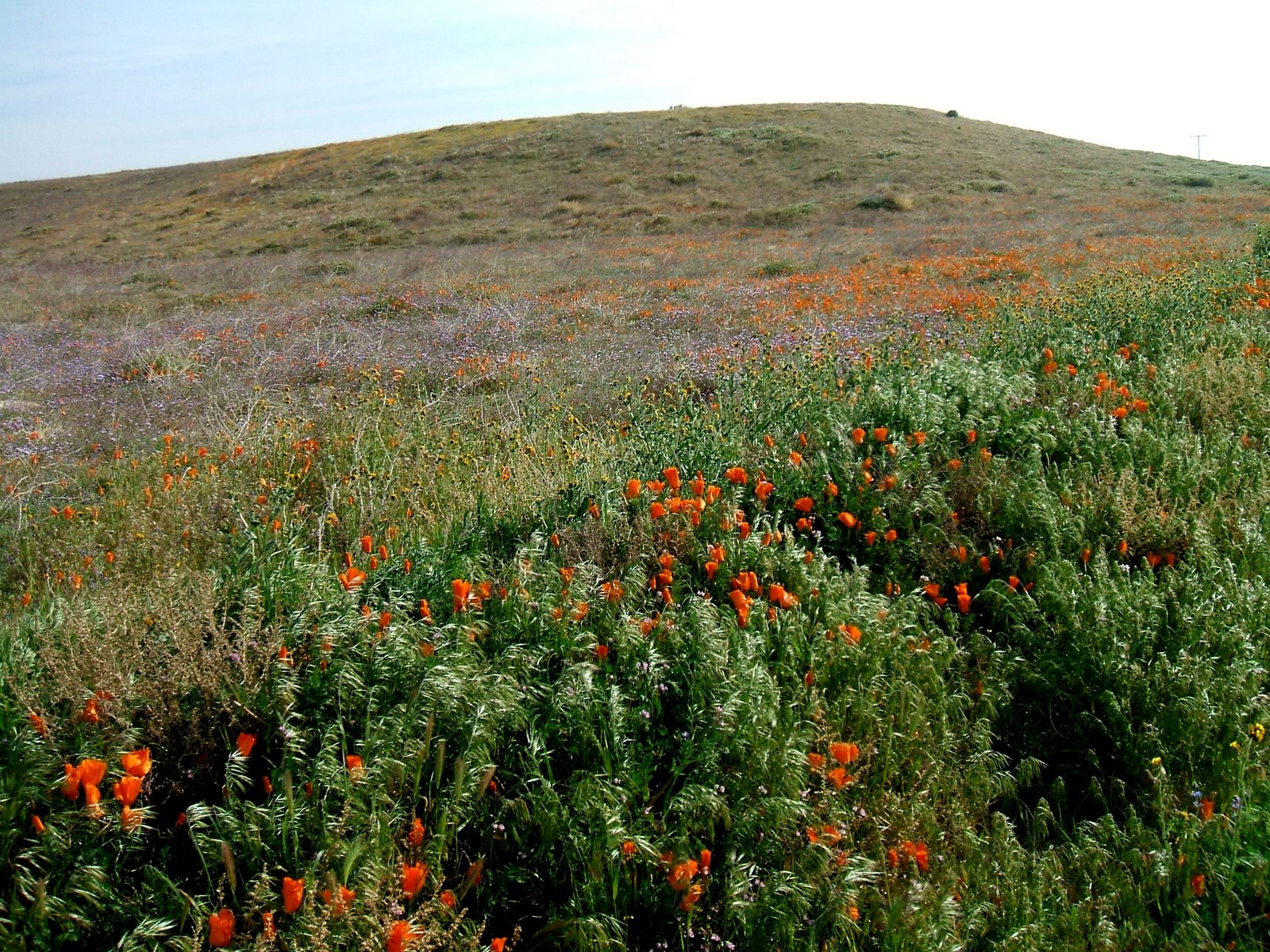
Digital Desert Mojave is a really great website for the Mojave Desert. If you plan on traveling there, it’s worth perusing at length. It is filled with detailed information about the landscape, rock formations, and documents the flow of bloom in the desert. After reading about the Antelope Valley Poppy Preserve and the promise of gorgeous displays, Mo decided to go there. It was a bit early in the season, but the photos show it can be lovely in spite of fewer flowers in full bloom. Another site along the way is Mormon Rocks, worth a stop and a look if you have the time.

Mo continued on to the southern entrance of Joshua Tree National Park. Arriving late on a Saturday afternoon meant that she was really lucky to get the very last campsite available in the Cottonwood Campground, and it took a bit of jockeying to fit the MoHo into that space, even at only 26 feet. When we got this rig, we were thinking that we wanted to be long enough to be comfortable, yet short enough for tight NP spaces.
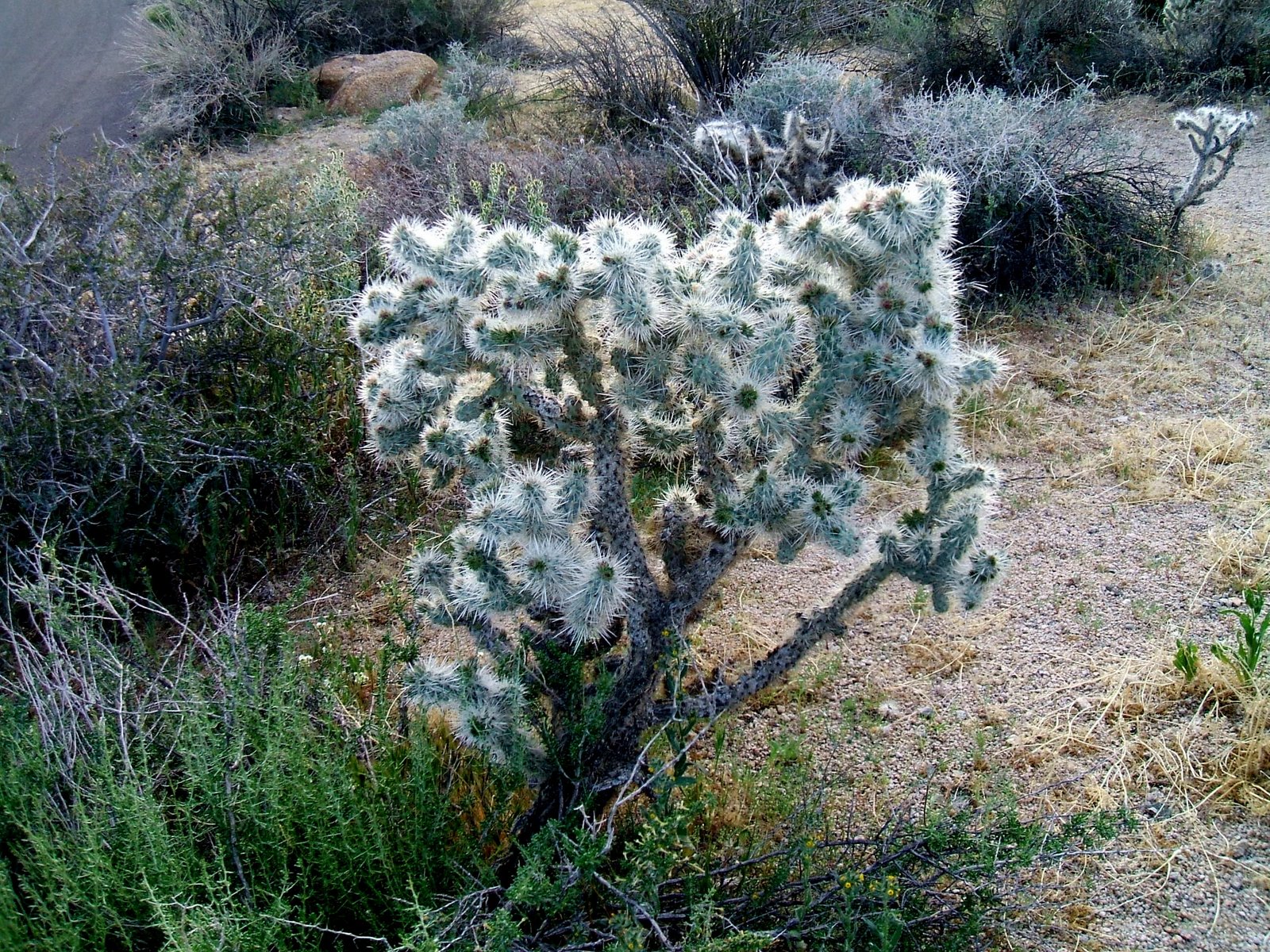
On Sunday morning the weather was perfect for a day exploring Joshua Tree, enjoying the cholla and ocotillo gardens, and all the amazing granite formations. The park has several routes in and out, and Mo had to exit and then go back in on Hwy 62 to get to the Blackrock CG which is large with many available spaces on this spring Sunday evening. These camps have water only, so it isn’t exactly dry camping, but almost. The JOTR website is filled with information about routes, ecology, camping, and hiking information.

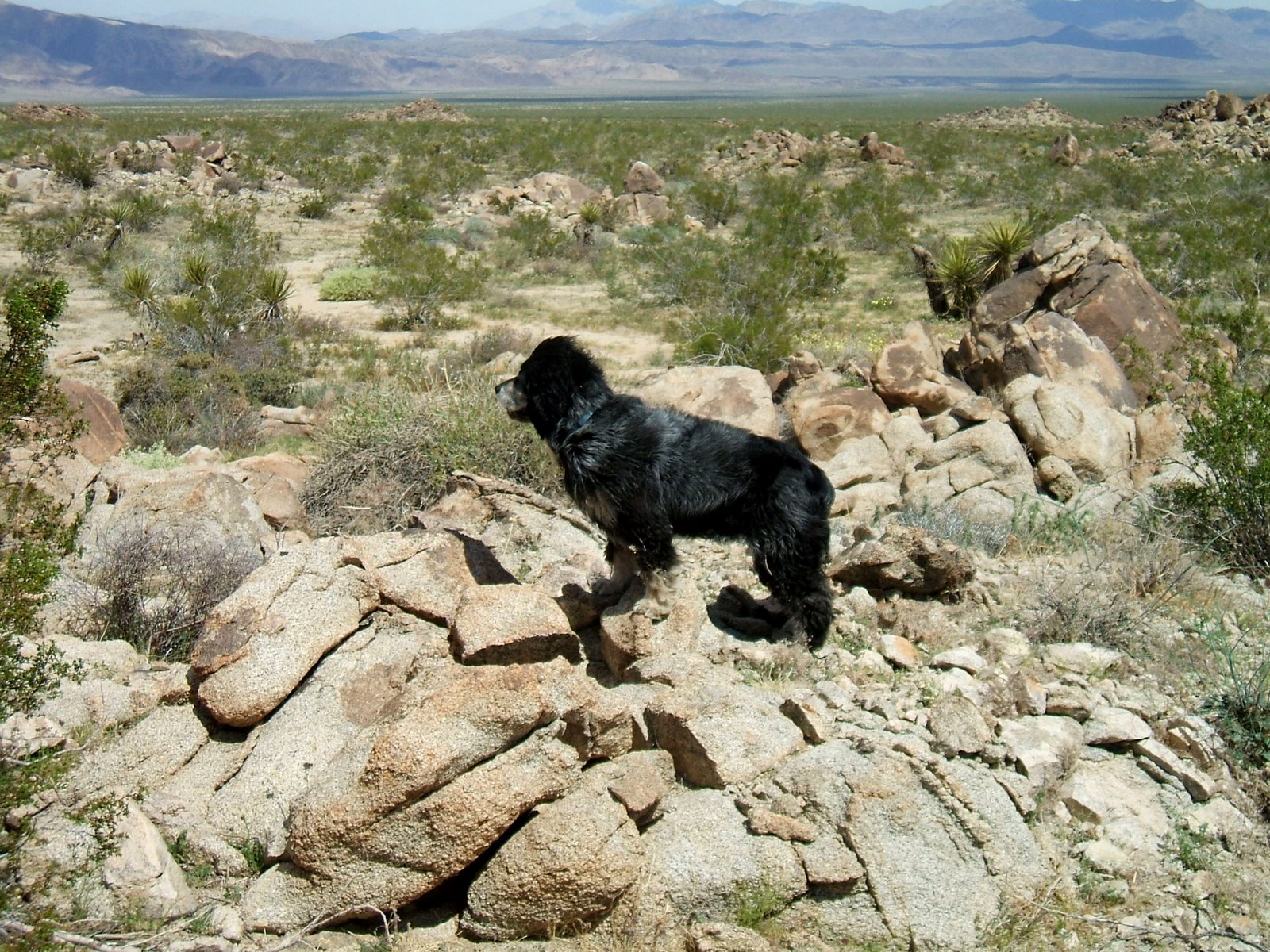
Monday morning Mo left the park, following historic route 66 a few miles before going north on Amboy road to Amboy, then north again to Kelso in the Mojave National Preserve. At Kelso there is a nice visitor center in the historic Depot, but Mo thought that perhaps the preserve wasn’t very old since there wasn’t a great deal of interpretive information in the area other than the depot. After a day of wandering, taking lots of flower photos, and enjoying the desert, Mo camped at the Sunrise Rock Roadside CG in the Preserve. It was again dry camping, with no water, but the hiking area was wonderful and Abby enjoyed the views as well.

Leaving the Preserve on Tuesday morning, Mo traveled north into Death Valley. The flower show was still minimal this far north, so she went on to Tecopa, checking out the hot springs and campground for future reference, and visiting the Dumont Dunes ATV site. After some more wandering,she headed for the Flying J at Barstow, hoping to repeat her boondocking experince from the previous Sunday. Once there, however, she was overwhelmed with the noise and huge number of trucks at this major desert crossroads, and decided instead to head for Kramer Junction at the intersection of 395 and 58. There is a huge solar generating station here that you can see for miles. After settling in for a pleasant evening at a great little wayside with other rv’rs, she discovered to her dismay that a sewage plant was nearby and little whiffs from the fragrant ponds made it less than pleasant.

On Wednesday, the 25th, with just one more day until our scheduled meeting, Mo headed back north on 395 to Inyokern to check out the active ghost town of Randsburg. There were many old buildings in use by small businesses making an attempt at survival in the tourist trade. Back south to Red Rock Canyon State Park and CG where the cliffs are lovely for hiking and climbing through the rocks and canyons.

Day 1 Wildflower journeys

Freedom. That is what it is all about. Springtime in California, snow in Oregon, a motorhome waiting in the driveway, and time. In the beginning of the trip, however, it was Mo who traveled alone. Unbound by the work world, she decided that it was time to find the wildflowers. we made plans for a long weekend, arranging to meet in Kernville, but before then, Mo traveled unfettered by schedules, free to wander the desert in search of the best wildflower shows, to find somewhere to park at night, to wake when she felt like it and wander off to another field of color the next day. That is what this RV’ing life is all about.
Friday March 20
Route: south on J-59, south on 99, south to I-5
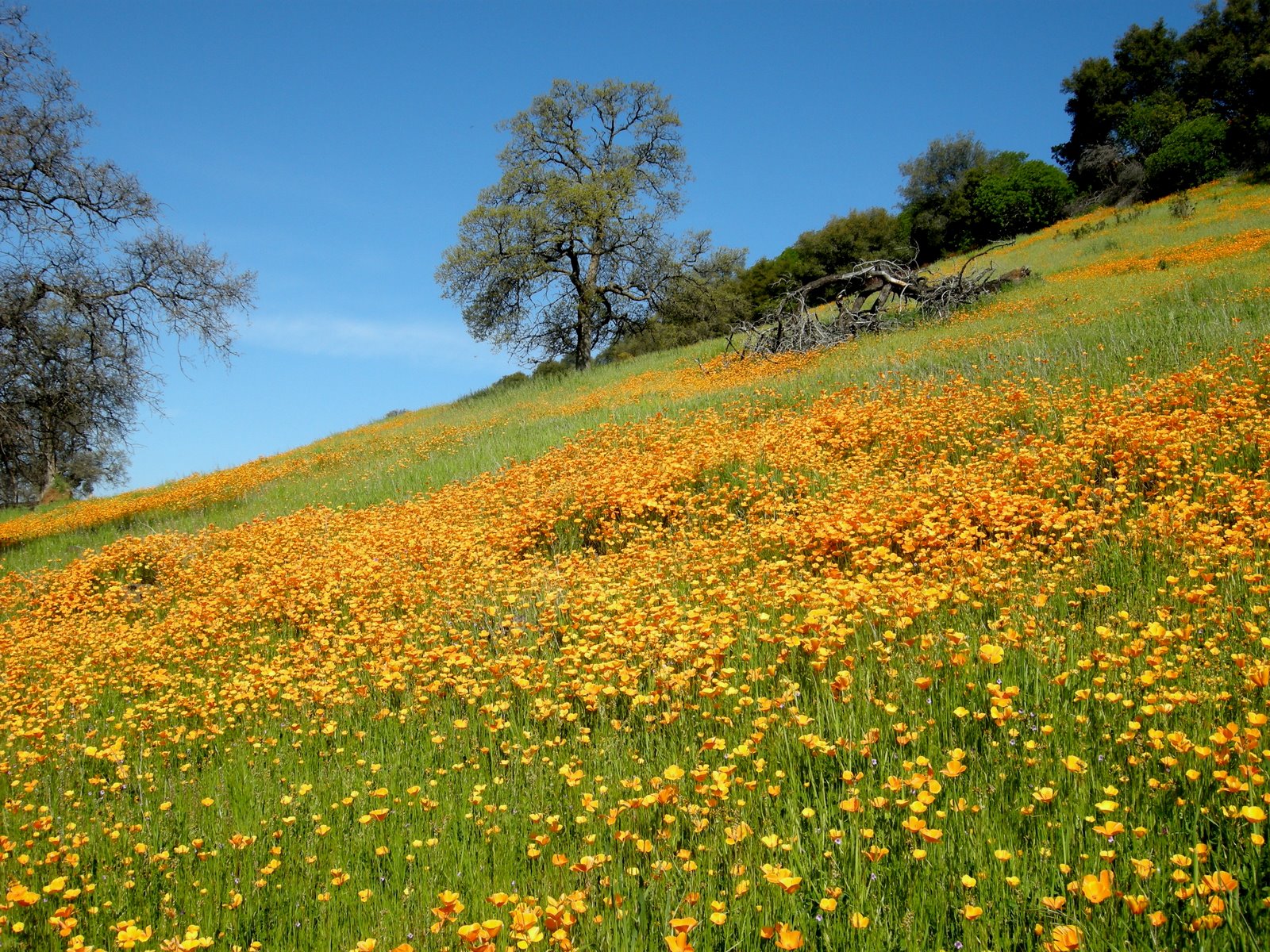
The familiar bumpy route south of J-59 to Modesto gets tiresome, and it seems that no matter where we go, we follow this road. Abby hates the bumps as much as we do, but the poppy show was at its height all through the foothills on this route. Yellow fiddleneck was also prolific, and while fairly common, it still makes for a lovely show.

South to I-5 and once more rewarded with a sea of blue lupine stretching all the way from the interstate east to the foothills south of Bakersfield. It’s smart to find a place to “be” before too late in the afternoon and around 4pm the Flying J on the Grapevine at Frazier Park was a perfect place to boondock. Mo said that when she went to sleep after watching a lovely sunset, she was basically alone in the big lot. Morning found her surrounded by 5 other motorhomes who also knew about the great free parking on this major route to and from LA. When in need for a quick and easy night stop, if the truck noise isn’t too bothersome, it’s worth finding a Flying J.

Wednesday Jan 2 Joshua Tree to Mojave

Wednesday morning we got up and had a good breakfast, enjoying the desert light a bit and didn’t get packed up and driving until 10 or so, thinking we had an easy day. 300 miles should be an easy day if we don’t try to do anything extra, but on this day we planned to see Joshua Tree National Park. Even though it was overcast in the morning, but the time we got on I-10 the skies were clear and bright. The turn into Joshua Tree wasn’t far from the California State Line and we went into the park, ambled the narrow roads and checked out the visitor center. This park doesn’t allow dogs on any of the trails, so we couldn’t go walking with Abby anywhere, but we did drive around a couple of the campgrounds, including the Belle campground which was small but seemed like the least crowded and the best place for us. The Jumbo Rocks campground was almost full and much busier, and we managed to get back on a cul-de-sac where turning the rig around was a bit dicey, especially since it was an uneven dirt road where we would have a much difficulty trying to unhook the Geo. After a bit off jockeying we got around the turn and breathed that sigh of relief that also said we were glad none of the tent campers there were around to watch us!


We looked at a few more campgrounds, and then stopped at a simple wide place in the road all on our own to park and have lunch and take Abby for a little walk just out into the rocks. Perfect. No people, nice view, perfect amenities, while I made a light lunch for us and we relaxed a bit looking at the soft rounded granite shapes of the landscape. Joshua Tree would be a nice place to camp and relax a bit, and maybe have some time to actually build a fire and bring out the cards. I think we played dominoes once on this trip, and am not sure if we ever managed a single card game. Geez.

Leaving Joshua Tree we traveled along the desert through Johnston Valley, which is still BLM land and designated OHV area. The good part about this is that we didn’t see any OHV’s, just a very long vista of wide open undeveloped desert. Something to think about when I complain about those OHVer’s taking over the country. Not a house or a pole in sight. It was truly beautiful. On west to HWY 18 and Bear Valley Road where we took a side trip south on Central and east on Roundup Way to find Mo’s old rental house in Apple Valley when she was teaching there so long ago. The little block house was actually still there, although surrounded by some mcmansions, but they all shared the same once magnificent view of the desert to the north, marred now by development as far as your eye could see. It was especially bad to the west toward Victorville and Hesperia, and as we headed west again on Bear Valley Road I felt as though we had dropped into some kind of hell. All I could think of is how grateful I was that I never applied for the soils job in Victorville and felt sorry for Paul who went to that job from rural Colorado.


We finally made it to our CampClub USA campground, Sierra Vista RV Park, in Mojave, just before they closed at 6 and found our place to settle in. One more time one of the fancy bells and whistles for the MoHo gave us some trouble. While we were driving through Joshua Tree, the warning light for the leveling jacks came on, and we stopped, turned off the engine, and it went off. But then last night when we tried to level the rig, nothing happened, no lights, no power to the touch panel, nothing. In spite of all the manuals we have in the huge box, there wasn’t a speck of info on the levelers, so we went searching the internet. Only problem, is that in Mojave, even though I had 4 and 5 bars on the phone card, the connections was still s l o w w w . as in very nearly not moving at all. In spite of that, we found the HWH Hydraulic Levelers web site and found the owner’s manuals, the operation manuals, and even a powerpoint demonstration on how to level the rig. Sure do wish I had that in the beginning! But all to no avail, except to reassure us that sooner or later we will get some good help from either Rueben at Stahman’s or from HWH directly and eventually the levelers will work again. Lucky for us it was the last night and our site was unbelievably perfectly level. Something that doesn’t often happen even in the most expensive parks. And our little place only cost 13 bucks last night! It was after 9 when we finally gave up on figuring out the problem and went to bed. About then Mo discovered some glitches in the Fantastic Fan in the bathroom, but thank goodness she agreed that we didn’t want to spend one more minute trying to figure something out.