http://picasaweb.google.com/kyotesue/Day7EphesusAndTurkishCarpets#
Every year when we gather for
Thanksgiving, I ask my family to go through the ritual of saying what we are most thankful for that has passed in the previous year. I am sitting at the moment in a generic looking lobby of a resort hotel in Kusadasi, Turkey, thinking of my daughter in Klamath with the turkey in the oven and safe in a warm house. I am thankful that my family, each of them, has a safe warm home to live in, and good food to eat, and that I have a family. Truly thankful.
I am much less tired this evening than I was when we arrived here in Kusadasi. It’s nice to spend more than one night in a row in a place. Today Mo and I decided to skip out on one of the optional tours and just walk around town and check things out on our own. Nice. Kusadasi is a very popular beach resort town during the summertime, but at this time of year, things have quieted down a bit and it’s really quite lovely.
After breakfast today we all loaded up for the trip to Ephesus. In addition to the ruins, we saw the final home of Mary, Mother of Jesus, at least according to local legend and tradition. This is supposedly the place the John the Disciple brought the mother of Jesus to keep her safe and cared for until she died peacefully many years later. True or not, the shrine was lovely, beautiful and peaceful. Again, it was perched on top of the highest mountain around, with amazing views of the countryside and the distant Aegean Sea. From the road the ruins of Ephesus are visible, as a city much larger than what has been excavated so far.
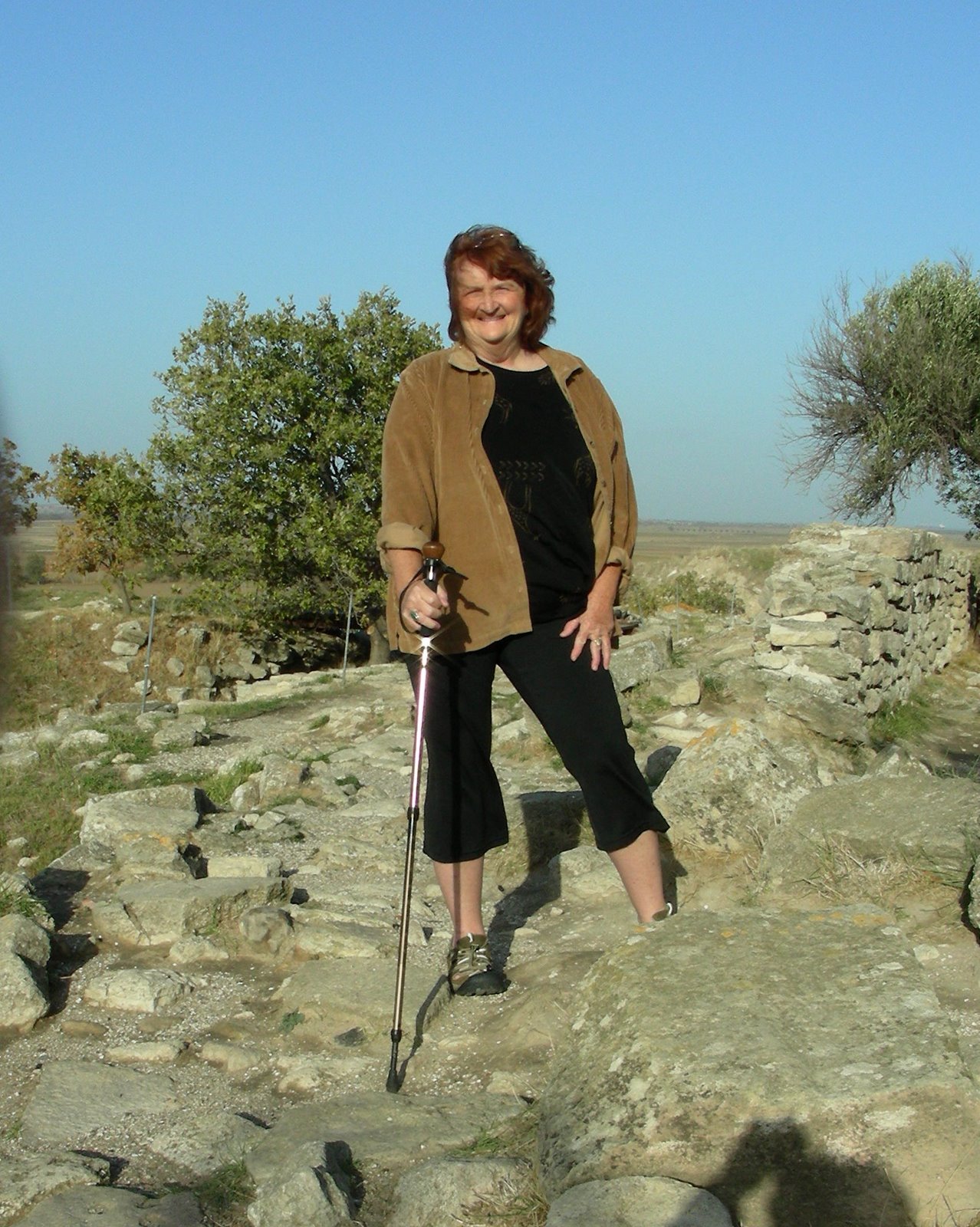
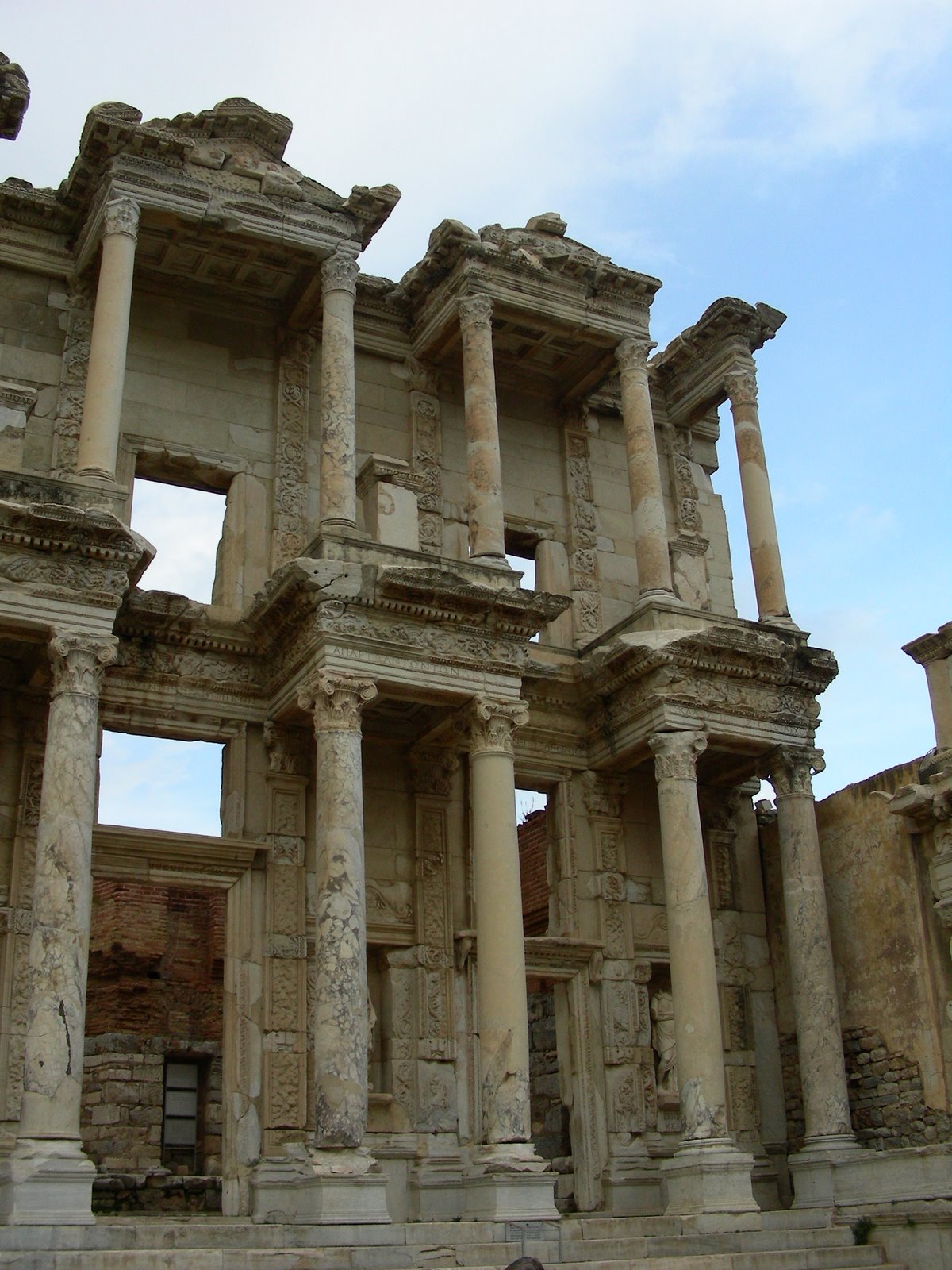
I had no idea what to expect from Ephesus. I knew it was a cultural center during Hellenistic times, that it mentioned in the bible, that Paul wrote letters to the Ephesians, which I read several times as a teenager, but to be in the city of Ephesus was a surprise. At first, it was a bit of a disappointment. It would take a lot to outdo the magnificence of those huge white columns we saw yesterday at Pergamon, and from the upper road, Ephesus isn’t very impressive. But as we continued to walk the old roads, deeper and deeper into the city, it was more and more obvious what a large, impressive, and civilized city this once was. We saw the baths, the latrines were good for a laugh, with our tour guide demonstrating how they were used as gathering places for the men. The library at Ephesus is truly impressive, magnificent, although much smaller than the one at Pergamon, where there were 200,000 volumes. Here at Ephesus, there were merely 20,000 books, but the edifice is incredibly beautiful. It amazed me to see how the archaeologists manage to piece the puzzle together as they reconstruct this city from the rubble and tumbled pieces of marble and stone.
The theater at Ephesus seated 22,000 people, and was built again in the Hellenistic style that fits the contours of the landscape. For my daughter, Melody, and for her friends in the theater, I took pictures of the backstage area at the theater in Ephesus, the place where there were only comedies and tragedies. Only later with the Romans were the lions and the gladiators brought in. The Greeks were so civilized. The pillars supporting the stage were still there, but after the Romans came, the lower seats were converted to a wall so that the wild animals wouldn’t harm the people in the stadium. You could see the doors where the lions entered the arena. It was interesting seeing the evolution of this magnificent city from a place of learning and culture to a place of Roman sports and indulgence. Ephesus was a surprising wonder.

After our tour of the ruined city, we went to a carpet dealer. I know it might be fun to sit in a little shop in Istanbul and buy a carpet, but I’m still not so sophisticated that I didn’t appreciate a little help. Of course the tour company gets a cut of whatever we buy, it’s like that no matter where we travel, but it still was a lot of fun and a great show. They had carpet weavers making several different kinds of carpets and explained the details of those differences, including the number of knots, the fibers and dyes used, and where the different styles originate. Then while we had a great lunch of Turkish pizza, cheese rolls and beer, we were wooed with a display of Turkish carpets that took my breath away. The emcee started simply, with a discussion of the simplest killims, and went on to talk about silk carpets that have hundreds of knots per inch and the skill needed to make these kinds of carpets. Then the show began. Men came out in groups with carpets, throwing them out on the floor with a flourish, one after the other, more and more, all on top of each other. The colors were thrilling, and then he said, take of your shoes and walk on them, so of course, sensory me again, was walking barefoot over thick silk carpets that went for 32,000 US dollars. What fun! I came on this trip, knowing down inside me somewhere that I would buy a carpet, and sure enough the silk ones caught my heart. Also they caught my breath when the one I truly loved was priced at 4400 US. Maybe not. So then the tiniest one, a lovely piece of silk artistry that I could hang on the wall, maybe a foot by two feet, was 1100 US. Maybe not. Ahh well, they were lovely to look at and wonderful to feel beneath my feet. And yes, I did buy a carpet, a keepsake for a lifetime from this delightful country. Only my carpet is wool on wool with only a couple hundred knots per inch, but it isn’t even dyed, it is made from the natural colored wools of the sheep. I am tickled. Included in the price is the customs, the taxes, the shipping, and in a couple of months my carpet will be delivered to my door fedex. Another nice thing about settling for the tourist carpet thing. It was surprising to see how many people in our group bought carpets, some more than one, and my fellow soil scientist bought one that was 10×12 for their lovely hardwood floors back in North Dakota. Glad I don’t have to pay that bill!!
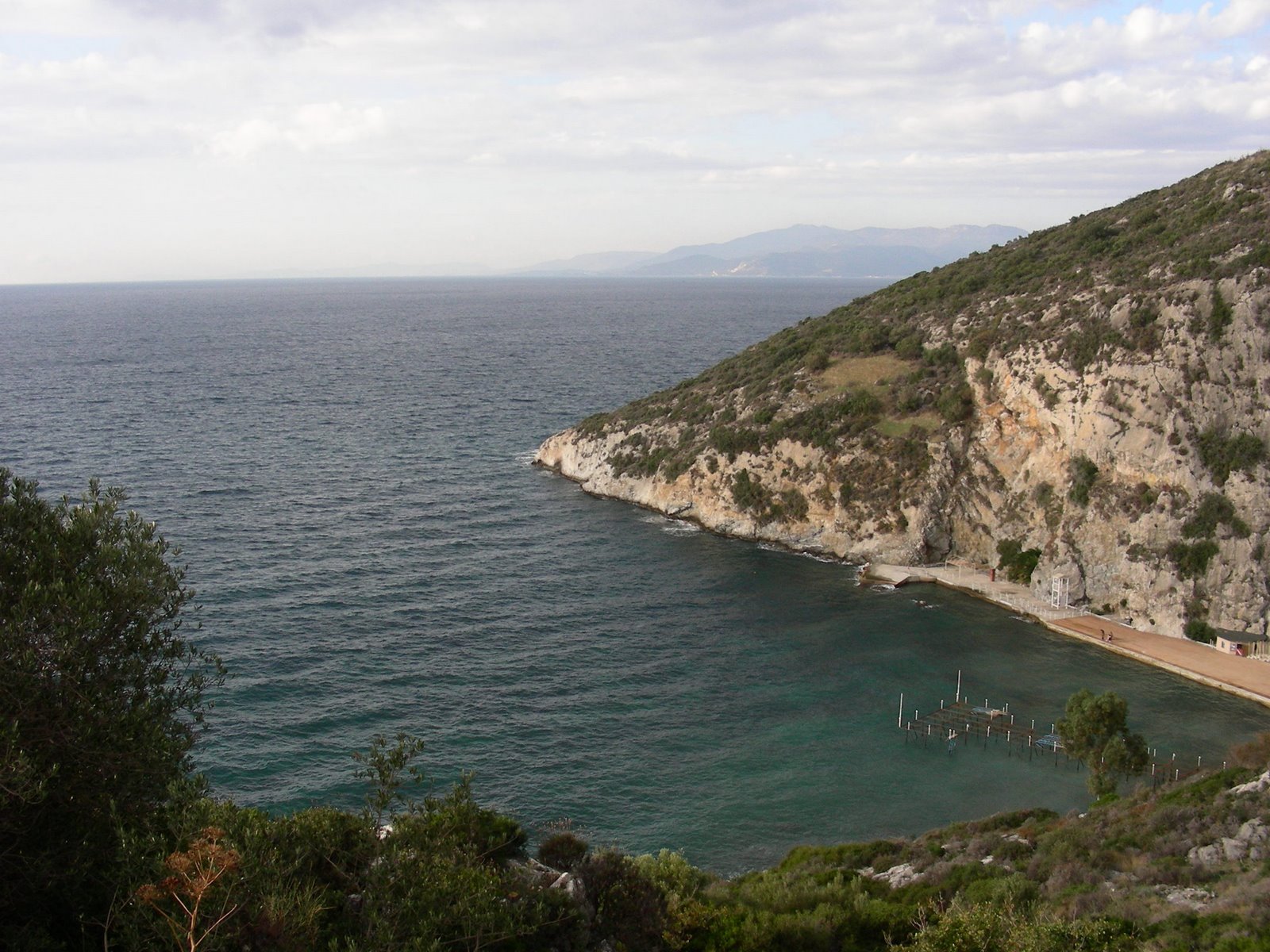
After the carpet venture, we sipped on Turkish coffee and waited for our van. The van driver’s name was Abdul, and he turned out to be our very own scenery man, a much better trip than the bus to the “village” would have been. He took the 6 of us around the hills to high points over the sea and we got some gorgeous photos of the Aegean we wouldn’t have seen any other way. Home to our hotel, we unloaded our bags, and headed back out to walk the promenade, find a supermarket and a pharmacy, and enjoy the feel of the city, and the gorgeous views along the beach. It was a wonderful way to end the day, with the long walk, and back to the hotel room for a rest before dinner.
This hotel room is way too big, with two rooms, a suite actually, a huge hall, and still you can’t get two people in the bathroom at once. Very funny. But we have big windows that we can open, fresh air, and a view of the sea from the balcony if not from the room itself. Tomorrow we continue on to Pamukkale, although what else is on the menu is completely gone from my memory. Guess we will just get up, put the bags outside the door, and see what the day has to offer.

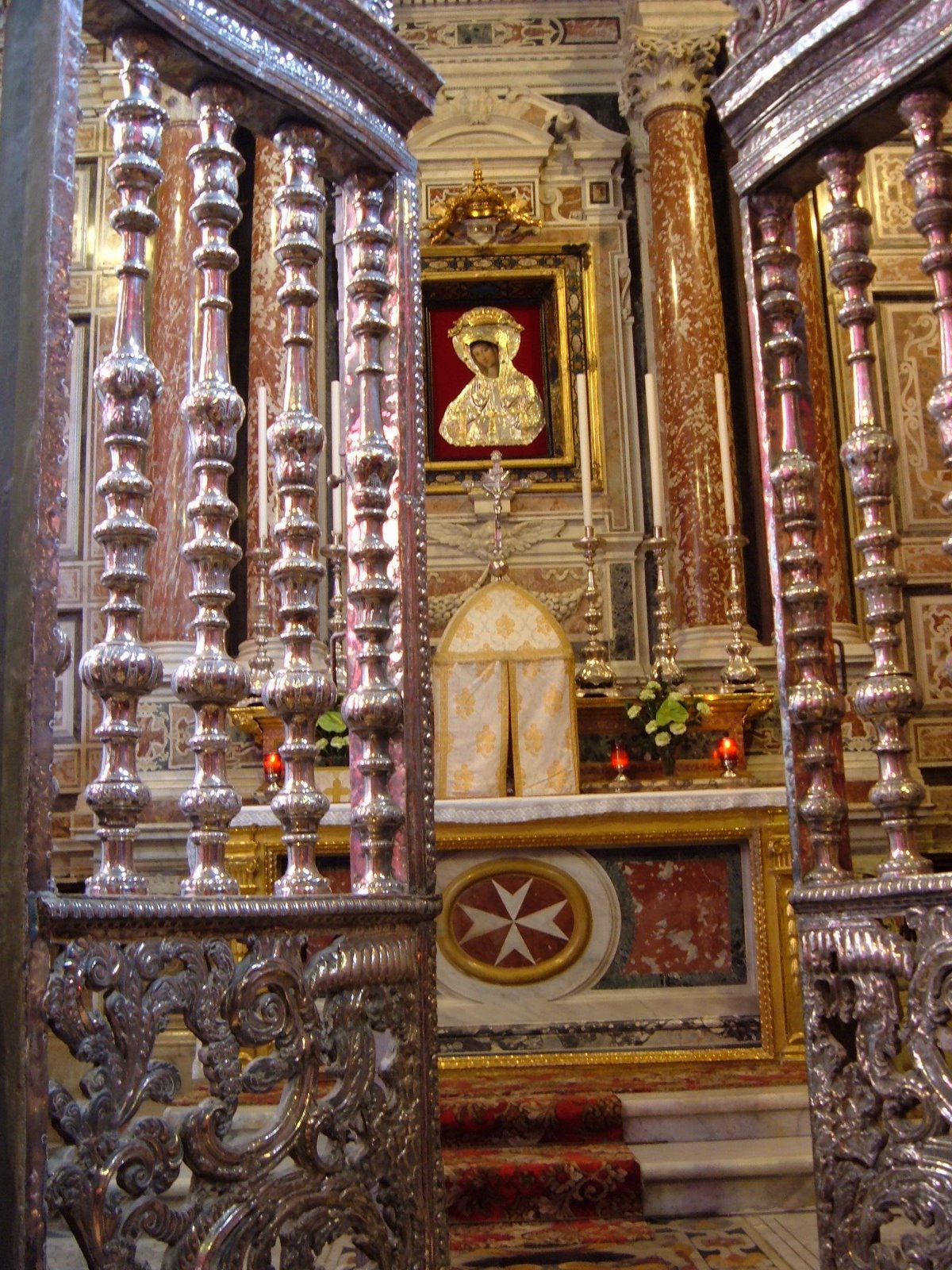
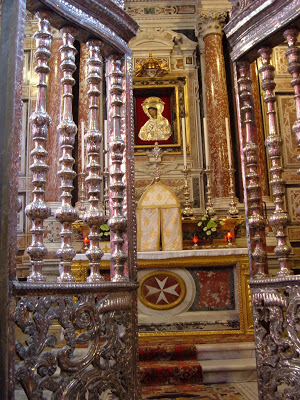 Today we planned to join the group walking tour of Valetta. Our tour guide, Stephan, is Maltese and has lots of good inside information about the country. He wears really gorgeous scarves tied up European style and very tight pants. Ha! During our walking tour with the group we saw St John’s Cathedral and the Michelangelo Carraveggio painting of “The Beheading of St. John”, hailed as one of the finest paintings in the world. The cathedral was truly magnificent and I bought photo postcards to remember the details since flash photography wasn’t allowed in the interior.
 The MoHo and Other Traveling Tales