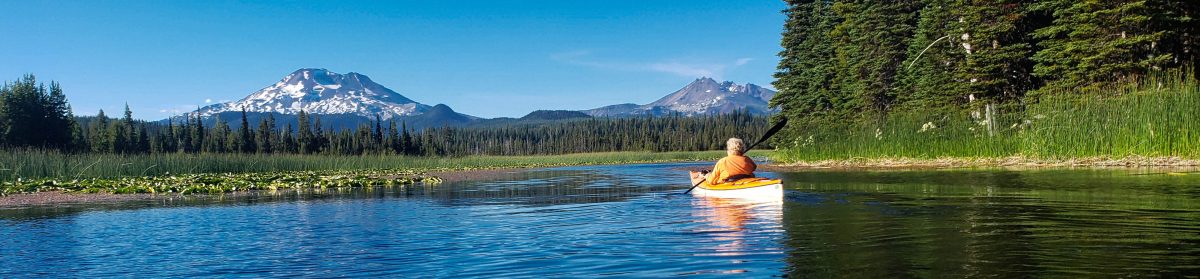
Medicine, or dropping off the grid into a Volcano

Medicine is a word of several meanings.  As in, Take Your Medicine, or more beautifully, This Place Has Powerful Medicine.  Medicine Lake is named for the second meaning, the sacred meaning, but the two seem to overlap here in the deeper meaning of healing, either body or spirit, and of course, both are connected.morning miasma on Medicine Lake

Medicine Lake is a small lake in the bottom of a 4 by 7 mile caldera on the Medicine Lake Highlands near the Northern California border.  This sweet little lake is just a couple hours drive from Klamath Falls, and yet I don’t often hear of people from Klamath traveling here. Most of the license plates are from California, with folks driving up the nice paved two lane road from Mt Shasta.  It is a bit of a drive, off the grid entirely, so perhaps that accounts for the open campsites and quiet lake. 


evening play on the beach at Medicine LakeThere are no hookups here, no cell phone service, water in the campground but not at the sites.  We came ready to boondock for six days, with a full tank of fresh water and empty waste tanks.  Generator use is allowed in the campground from 8 in the morning to 10 at night, but we tried to be considerate and except for one early evening movie when the campground was nearly empty, we only ran the generator for an hour or so in the morning to keep up the charge.  We were careful and when we left, our tanks still had plenty of room to take on the extra six gallons of water we added with jugs and a funnel.  Mo has a small solar panel and although it doesn’t support heavy use, it does keep the charge up throughout the day.We unhooked the trailer to slip it into the parking area next to the MoHo

Medicine Lake Highlands has the distinction of being the largest volcano in the Cascades and the largest volcano in California.  Unlike the dramatic peaks we are all so familiar with, Shasta, Lassen, Mt Hood and others, this volcano is a broad volcano with dacite and rhyolite lava and obsidian flows as recent as 1000 years ago spreading from the shield volcano for more than 30 miles in every direction.  From Klamath Falls, the Highlands can be seen in the distance to the south, unassuming, appearing as a nondescript broad plateau.  Medicine Lake Camping (2)-032

Medicine Lake Highland’s volcanic area exceeds 200 square miles in Modoc and Siskiyou counties and encompasses portions of three National Forests including Modoc, Klamath and Shasta-Trinity. Over the last half-million years, volcanic eruptions on the Medicine Lake shield volcano have created a rugged landscape dotted with diverse volcanic features including more than 700 lava tube caves. Some of the most popular features include Glass Mountain, Burnt Lava Flow, Medicine Lake Glass Flow and Undertakers Crater. Medicine Lake has no known outlets yet the water remains clean and clear with inflows only from snowmelt, rainfall and springs.

Medicine Lake mapDriving south from Klamath Falls through Merrill, home of one of the best quilt shops in Oregon, Tater Patch, we continued into California on Highway 39 to Alturas, turning west toward Tionesta 40 miles or so south of Tulelake.  The road to Medicine Lake is well marked, but narrow, paved but very rough.  Abby and Jeremy complained quite a bit about the thumping, bumping rough sounds of the regular seams across the road.  I guess they are created to prevent frost heave on a road crossing soils thick with pumice deposits.take off blue heron on Medicine Lake

The road rises over 20 miles or so from the juniper sage desert at 3900 feet to high red fir and lodgepole pine forests at nearly 7000 feet elevation.  We watched the temperatures drop from the mid 90’s to the high 70’s as we drove.  The skies were clear and gorgeous, with just a bit of smoke from the California fires marring the blue.  In the past few years, we have planned trips to Medicine Lake, changing our mind at the last minute because of fires and smoke.  This time we decided to go anyway, because fires and smoke in the west seem to be a constant and if we wait for no fires, we may never get back to this favorite little place.Mo on the beach at Medicine Lake

We decided to skip the tow car on this trip, instead hauling the boats and bikes in a small trailer.  We have traveled here several times, and spent days wandering the forest service roads exploring lava flows, obsidian flows, and taken in the views from the high mountain fire lookouts.  This time we intended to relax completely.  Without the car, we wouldn’t be tempted to wander any farther than we could go on a bike or our own two feet.  camping kitty

We arrived on a Tuesday afternoon, to find one of our favorite sites wide open.  There are three main campgrounds at Medicine Lake, with the first one a bit more open and a sign says not suited to larger rigs.  We aren’t quite sure what that means, because the sites are quite large, but the road is narrow.  The sites are also not even close to level.  We could camp there in a pinch, but the second campground, Hogue, is our favorite.  There are a few sites in the upper part that can accommodate bigger rigs, but our favorites down by the lake are a bit small and not level.  Medicine campground is the third one in, usually busier with lots of room for larger rigs.  The Headquarters campground is farther west on the gravel road beyond Little Medicine Lake, and is very quiet, open and usually empty because it is a bit of a distance from the lake with no lake views.  Another place that would do in a pinch if you drove a long distance to camp and there are no reservations here.

Our site 45 has a gorgeous view of the lake, a nice big picnic table down the slope from the rig, and for some reason there are two additional rock firepits added to the big one that was here when we camped last in 2008.  A rocky trail leads down to the water and with a bit of maneuvering, we got the boats down to the shore where we could leave them safely for the duration of our visit.site 45 overlooking Medicine Lake

We settled in for a great afternoon of watching the water, watching the sky, playing cards, and I brought out a decidedly sinful and delicious supper of old fashioned hot dogs, baked beans and potato salad that I made the day before at home.  The site has only a small drawback.  It really is a bit more suited to tent camping than a rig, but we managed to get the MoHo leveled and pulled in far enough that the back end was off the camp road.  It is times like these that we are grateful for our perfect length of 26 feet.  We can fit most anywhere and yet still have enough room to travel comfortably for weeks or months.not bad.  Site 45 snagged on a Tuesday afternoon in August

Our sleeping area looked out over the camp road, but there was no one in the site across from us, and the road was quiet, so it wasn’t a serious problem.  The night was completely silent, the moon was low and reflected on the lake and the stars were brilliant.  I wondered momentarily about the next several days.  No internet, no phone, no car.  Just a book, a boat, a bike, and a chair.  Ahhhhhhhhh.first night supper at Medicine Lake  Yum!

Next: kayaking, birds, and social life at Medicine Lake

August 28 Sunday Camping at Silver Falls State Park

Capture 255 milesIt has been less than two weeks since we returned from our long trek to Alaska, but a short three day jaunt to a beautiful Oregon State Park seemed just so simple.  We planned this trip for a couple of reasons: For one, we loved Silver Falls when we visited in the spring of 2010.  The real reason for the trip, however, was to see the dahlias in full bloom during the Swan Island Dahlia Festival nearby in Canby. 

I grew hundreds of dahlias at one time, selling cut flowers at a weekend farmers market along with my dried flower bouquets and fresh herbs.  It was a good time in my life, but oh sooo much work.  Here at Rocky Point, I don’t have much opportunity to grow dahlias, although I still plan to at least try. Mo and I plan to downsize by 2020 or so, and my one request is that we do so in a place where I can putter in a real garden with a real growing season and grow dahlias. 

As we readied for the short trip, 255 miles total, everything seemed just incredibly simple.  The MoHo was spotless and lovely, and I only needed clothes for three days and two nights. With the temperatures predicted for the area in the mid 80’s, shorts were in order, and I didn’t even bother with sweats or long pants.  (Oops, we live in Oregon for pete’s sake!). Food was simple as well, just two dinners, a couple of breakfasts, and some hiking food for daytime.  Gee.  We were loaded and ready to go in no time. After the long preparations for the Alaska trip, this was such a delight.

overlooking Upper Klamath NWR from Westside RoadWe took our time getting on the road, enjoying the warm, sunny morning. Dressed in shorts and sleeveless tops, we were glad to have returned home to Oregon in August to enjoy what Laurie and Odel called the “elusive Oregon summer”.  Yes, it IS elusive at times, but less so on the east side of the mountains where we live. 

heading west on Willamette Pass hwy 58 smog in our future :(Fire is a given in the west, and as we crossed the Wood River Valley just north of home and the Upper Klamath NWR, there was smoke evident to the east and north from the many fires ignited in Central Oregon over the past couple of weeks.  The route is familiar and a bit boring at times, especially north on Highway 97.  The soils are deep pumice from the eruption of Crater Lake (Mt Mazama) more than 7,000 years ago, and the vegetation is dry lodgepole and ponderosa pine.  Only after the route rises to Willamette Pass does the timber begin to thicken and darken to lush Oregon green.

The Willamette Valley is the heart of Oregon, even though the actual area is very small when compared to the entire state.  Eugene is the largest city south of Portland in this valley, and as we entered Eugene we noticed the brown pall of smoke in the air from burning fields of blue grass, from dust rising from busy plows, and yes, from cars.  I think that is actually smog, although being raised in Southern California I do know that real smog is a bit uglier than what we found on the Eugene skyline.

Silver Falls Campground near site 79hurry up Mom!By the time we got to the park, it was evident that even on a Sunday afternoon, this was a very popular place.  I am glad that we made a reservation back in April, since the park was completely filled for the entire week!  It was warm and sunny, and we were glad for a shady site with power and water to enjoy the late afternoon.  Jeremy was really anxious to get out of the rig and explore, and I put on his fancy city harness and he was out of the rig before I could get down the steps.  He is funny, sitting quietly for the harness, and the minute the last snap is done he jumps down to the door knowing it it time! Even at 15 years old, I think he might want to explore farther than I would want, so I keep him harnessed when we are camping for safety.

paved bike trail from the campground to the dog areaAs the evening progressed, we took the beautiful paved bike trail to the dog exercise area, a special treat in a state park because this one if for dogs off leash!  To our surprise, on this warm Sunday evening, there were no dogs there.  Families were everywhere, with children playing in the swimming area along the Silver River, bbq’s going at every picnic table, volleyball and soccer games in progress. The park is within easy driving distance of Salem, Albany, and even Portland, and from what we saw on this Sunday afternoon, it is a popular place to spend a Sunday.

popular swimming area on a warm Sunday eveningThe presence of huge, extended families with grandmas, grandpas, babies, aunts and uncles, all enjoying the afternoon together was heartening.  Most of these families were speaking languages we didn’t know, but with the din of so many conversations that really didn’t matter. The language of a park on a Sunday afternoon is universal, after all. We had a great time letting Abby run uphill, hoping to wear her out.  Later in the day, we expected to have to leave her in the rig while we hiked the waterfall trails where dogs are not allowed.

the dog exercise area is leash freeThe Silver River was low at this time of year, and I was surprised to see just how lovely the falls looked even with less water.  The stream slips over South Falls in a clear, wispy ribbon, much different from the crashing torrent we experienced in April last year.  The trails were full of families, dads carrying babies in backpacks, grandpas with canes (me with my walking sticks!) 

even with the river fairly low, South falls is lovelyOne more time I did a stupid crash, this time thank goodness without the camera in my hands!  Stepping out of the MoHo I missed the step and bent the weak ankle one more time in a direction it doesn’t particularly like and went down.  I know to hold on to the door handle, and had a good grip, so didn’t go all the way down.  Mo laughed again, saying I must have bones of steel because with all these stupid falls I don’t seem to break anything. Who knows what that is about.  This time again, it was a big divot I didn’t see because it was UNDER our entry rug.  Sigh.  Hold on tight and keep your eyes down, I guess.

We chose a camp on the A loop again, but it was more open than I might have liked.  Our neighbors were right behind us, with their campfire so close to our back window that I had to close the night shade all the time so they couldn’t see inside.  Our fire was far enough forward in the site that we could sit there without being in their back pocket, and we were glad that the folks directly on our other side seemed to be indoor types, so we had a bit of space to ourselves.  I couldn’t believe how many kids were in  that campground, and dogs, and bikes.  It was some kind of biking heaven, I guess, with tiny little kids on trainers with helmets bigger than they were.  The sound of screaming, laughing kids and barking dogs was almost deafening.

home for a couple of nightsSo often, in this lifestyle, we hang with retired folks in sedate RV campgrounds that are quiet and calm.  We are retired ourselves, and live in a community that is composed mostly of retired folks or summer visitors.  My grandkids are all teenagers now, and as I sat at our campfire watching all those kids, I realized just how insulated we can be from the din of family life.  Have I used the word “din” a lot?  Hmmm.  Sunday afternoon at Silver Falls State Park was a lovely and noisy place.

Next: the dahlia show!

The rest of the photos are linked here


Helicopter mapping in Hells Canyon

so wildRecently Laurie and Odel, of Semi-True Tales of our Life on the Road, have been staying in Joseph, Oregon. Like so many others, I love Laurie’s blog; wonderful writing, beautiful photos, great humor and always interesting. Laurie’s blog was the only one I followed for several years before I had any clue there was such a thing as an RV blogging community.  Last August, when we met in Minot, Laurie brought me up to speed on RV blogging in general, introducing me virtually to Rick and Al and many others. But I digress.

Laurie posted a photo of the Hells Canyon overlook that instantly brought back some amazing memories.  Last October I wrote about what it meant to be a soil scientist, mapping soils in the field.  If you weren’t around for that post, and are interested, you can read it here. Another little side note here, all these photos are scanned from my old scratchy original prints and I haven’t really had time to get them all clean and shiny. ( As usual, you can still click over the photo to enlarge it if you choose.)

so wild, but still a road along the Snake River in this part of the canyonMapping soils in the wilderness of Hells Canyon was one of the highlights of my career. At that time, GIS (Geographic Information Systems, a fancy name for maps on a computer) was just a budding science, and our crew was part of a pilot project using digital imagery and digital elevation data to evaluate landscapes.  It was called the Soil Landscape Evaluation Project, SLAP.  To the current generation of mapping soil scientists, this stuff is old hat, and Digital Soil Mapping is the way of the future.  In the mid 80’s however, we still used aerial photographs and a stereoscope to make soil maps. 

For the Hells Canyon project, however, we had several hundred thousand inaccessible acres to cover in the most efficient manner possible.  With the cost of the helicopter and the pilot, we had to make our choices count.  We used the SLAP project methodology to determine the sample pit locations by evaluating the slope, the aspect, the vegetation patterns, and with the geology and climate maps we determined positions that would best represent what was most typical for that particular set of parameters, since how soils form is directly related to those variations in climate, vegetation, geology, and landform.

My tent is a bit aflying into the base camp on Wapshilla Ridge my tent is over by the tree on the leftpart from the guys on the left side of the photo by the tree.

Then the real work began.  I worked at that time with a crew of six, of course I was the only woman on the crew, since soil mapping in those days was usually done by men. Some of the men I worked on this project with are still pretty important in the world of soil survey.  Pete Biggam is now the lead soil scientist for the National Park Service, Tom Hahn is the MLRA Leader in Colorado, and Mark Keller has retired after a wonderful career mapping soils in the west.

If you look very closely, you can see our camp on the upper right Base camp on Wapshilla Ridge Hells Canyonside of the ridge next to the trees.

At that time, the soil survey office for Lewis-Nez Perce soil survey was in Lewiston, Idaho, and I still remember the excitement of loading up the trucks with all our camping gear and food for the duration and heading south into the wilderness as far we we could go on a rough dirt road.  Our campsite was on a high, flat ridge overlooking the wild canyon, broad enough for the helicopter to land and for us to set up a base camp.

With a huge campfire and a great supper we settled in to the dark night anticipating the days ahead with excitement.  During that time period, soil survey in the west was well funded, and several crews were using helicopters for access, but it still wasn’t something that was very common.

Sunrise from our ridgetop camp was always gorgeous.sunrise from camp

Our days were long, up at sunrise with a good breakfast over the fire, we would then suit up in our flight suits, load up our maps, aerial photos, shovels and description kits, and pile into the helicopter. Even though I tend to get seasick, I was never bothered in the helicopter.  The pilot was an old Viet Nam vet who owned the copter company in Lewiston and was a great guy.  I rode in the navigation seat, locating our predetermined sites, with my mapping partner in the back seat.  The pilot would land that copter on one runner on a rocky ridge, hovering as we bailed out with all our gear.  There were three crews of two people each, and he would drop each pair to a site and then spent the day leap frogging from site to site. 

the copter2Our job was to get full soil descriptions in the hour that we had before the copter returned.  The two of us hiked down opposite sides of the mountain, dug a pit as deep as the soil required, and described our soil.  Lucky for us, the soils in the canyons were usually less than the five feet deep required for a full description and we would get stopped by hard bedrock ranging from a foot to 3 feet deep.  We would then climb back up with our tools and soil sample boxes, packs and shovels and be ready as the helicopter approached  and hovered and we climbed back inside.

steep canyonI’ll never forget the engulfing silence of the canyon as the copter left and I hiked down to my pit location.  I remember sitting silent and still as an unwary coyote trotted past me sitting by my pit, oblivious to the idea that there could be a human in this wild place.  We did ten to twelve sites a day, and by the time evening rolled around we were all pretty much exhausted.

Of course, we had only limited water on our high ridge, but the pilot took great care of us.  In the late afternoon light, he would drop us into a sandy beach on the Snake River and we would all swim and laugh and cool off before he took us back to our high ridge for another night of canned beans and a big campfire.

This is one of my favorite favorite photo of Petephotos of Pete. Great Legs!

down to the riverThroughout my career, I had the opportunity to map in many wild places, but Hells Canyon was the wildest, the most magical and remote and something I will never forget.

At the time, I was also a wife and mother, in my 40’s, and my husband was the long-suffering spouse who managed the farm and teenagers until I would come home on the weekends. 

It was always fun when he picked me up on Friday nights after my week in the wilderness.  He would meet me with a bouquet of flowers when things were especially bad.  The time my daughter broke her leg getting thrown off her horse was the Friday night that I got the biggest bouquet.  There weren’t cell phones or internet at the time, so I was inaccessible for a week at a time.  I still remember him saying, “OK, what do you want first, the good or the bad?”  The good was often an especially big load of peas on the vines, and the bad was often related to whatever craziness the teenager would get into.  Good days, all of them.  cool water

Just thought it might be fun to share.  Thanks for reminding me, Laurie.

Pahrump to Fernley and home to Rocky Point

Highway 95 I can’t believe that I am once again sitting at my desk in Rocky Point, looking out the window at snow.  The snow came down in big fat flakes all day yesterday but didn’t stick, but this morning we woke to more than a good inch covering everything as if it were winter and not April.  Somehow luck was with us all the way home, and we slid into Rocky Point on bare pavement under blue skies on Tuesday afternoon.  This storm blew up the next day and now will be with us for a few more days according to the weather predictions.  I am hoping that all the folks on the road heading north are warm and dry and avoiding this latest round of weather from the Pacific.

Highway 95 (12) We left Pahrump early in the morning on Monday, driving hard and straight north on Highway 95, through the tiny town of Goldfields, and passing Tonopah, the Nye county seat, in the blink of an eye.  Somewhere in all my western travels, I don’t think I have traveled this route, usually preferring to go west to 395 in California.  We were rewarded with decent gasoline prices, at 3.69 per gallon for the $172.00 fill-up in Fallon, Nevada.  I heard rumors of prices well above 4 bucks on 395, but will have to see what Donna and Russ have to say about that, since I believe they traveled that route south in their pretty new Lazy Days called “Therapy”.  I think we must have passed each other somewhere close to Susanville.

Highway 95 (3) Highway 95 (9)
Goldfields, Nevada in the process of restoration by the local folks We were on the other side of Tonopah before we knew it

Highway 95 (14)The skies were clear all the way north, but the temperatures were only in the high 40’s as we traveled through Nevada.  Our plan was to boondock for the night, but when we reached Fallon, it was still only 3 in the afternoon, and once on the major east-west route of ALT 50, boondock sites were in short supply.  The lovely BLM land, great for boondocking, all seemed to be considerably south of Walker Lake, another spot that I would have liked to explore, but it was much to early in the day.  Like horses heading for the barn, we were on a roll and wanted to get as close to Reno as possible before stopping for the night.

A quick search on Streets, turned up a CampClub USA park west of Fallon in Fernley, Nevada, right on our route. My visions of camping in the open desert on a big alluvial fan with never ending vistas was only partially realized.  I was still on an alluvial fan in the desert, with a decent view only obstructed a bit by the RV next to us.  By 4pm we were settled in to a very nice little park called Desert Rose.   In addition to our CampClub discount, this park had just about every other club discount, including Escapees.  It wasn’t fancy, but clean and lined with level concrete pads, new trees, grass, and “the best cable TV this side of Michigan”, according to the very gregarious caretaker.  We even had decent Wi-Fi where I was able to post the last couple of blog entries.

Fernley to Home (1) We slept well, after staying up much too late catching up on cable news and the internet.  Tuesday morning dawned clear and gorgeous again, if a bit cool, and we were on the road by 7:30.  Our route was straightforward, through Reno on Alt 50 to I-80 to 395 north to Susanville, Alturas, and then on 39 home to Klamath Falls.  The skies were still gorgeous, with puffy clouds and snowy mountains in the distance as we approached our mountain home.

We love to camp at Medicine Lake, and the snow covered barren slopes of Glass Mountain, formed entirely of black obsidian, beckoned us as we passed the familiar turn-off on our route. 

Fernley to Home (5) Once in Klamath Falls, we gassed up the MoHo at Fred Meyer for 3.72 per gallon, picked up some vet only cat food for Jeremy, and took the Lakeshore route home so that we could stop in at Moore Park for our free dump site.  Klamath Lake seemed especially full, and the A Canal delivering water from the lake to the farmers on the Project was also full, indicating that for the first time in a couple of years, we are having a good “water year”.  The farmers will get their irrigation from the Project, and the salmon will have enough water to make it back up the Klamath River.  We will have enough water to get the kayaks back out in Recreation Creek hopefully very soon, at least if this snow ever melts.

Once home, we were happy to see that almost all the snow was melted and the road looked fine.  The grass was starting to green up except for extensive areas where the voles have tunneled a virtual city protected by our 4 month snow cover.  Daffodils are starting to appear, and the buds on the trees look good.  Mo backed the rig into her waiting berth and in no time we were unloaded and back home with the fire going, checking the recorded shows on the DVR and laughing at Jeremy racing around the house after all the invisible ghosts that must have taken over while we were gone.

Something wonderful about rounding this bend in the road and seeing our home turf across the lakeFernley to Home (21)

I spent all day yesterday washing bedding and rugs and clothes from the MoHo and tried to get adjusted to being back home while I watched the snow fall and remembered the 100 degree afternoon in Laughlin.  Sometimes that re-entry can be ambivalent; I’m so happy to be home, yet somehow feel a bit disoriented.  Mo doesn’t seem to get as confused by all this as I do, and she just settled in easily to our home routines without a hitch. By this morning, however, all seemed just fine to me, in spite of the deep snow.  I have no clue if I will be working next week, thanks to the government shutdown rumors, but either way, it’s good to be home.

Travel decisions and Grizzly Creek State Park

CG near Juneau As we were driving over the winding mountain roads on Saturday, there was plenty of time to talk about all sorts of things.  Among the conversations was the one often repeated, “So, we have at least ten good years of travel, right? When are we going to do the AlCan?”.  When Mo bought the first MoHo back in 2005 she was already urging me to think about retiring so that we could take that famous road.  Mo has some great photos of her first trip north in 1974 in a little Scout with some built in boxes on top to carry supplies.  She scanned all the faded, slightly scratchy slides a few years ago, and we look at them and laugh at the stories about mosquitoes while thinking about that future trip someday in the MoHo.

The result of these conversations was a decision.  We are embarking north around June 15th.  Tunnel Mtn CG_BanffOne of the quandaries of this time of year for traveling is how much we love where we live in the summer.  Not many places in the world prettier than Crater Lake and Recreation Creek in July, but Alaska is waiting and we aren’t getting any younger.  I certainly don’t want to go there in the spring or fall, although I have heard some folks say that the road is actually better when it is frozen.  Nah, I’ll take the mosquitoes and the cloudy skies over dealing with serious cold weather in the MoHo.  I have read enough horror stories over the last few weeks of folks dealing with all the cold in the southern part of this country this year to know better. I am excited, to say the least.  It is an epic trip, one for the bucket list, and I don’t want to miss it.

In the mean time, we will enjoy this week in what turned out to be foggy California and prepare for a hopefully warmer foray down to sunny Arizona in March for three weeks of desert time. 

morning in Grizzly Creek SP California On our way here, we stopped overnight at a sweet little state park along Highway 36.  In the gloomy evening, with fog dripping from the redwoods and no one around, it didn’t seem like much.  With morning, however, in spite of the gloomy skies, the park revealed some of it’s delights. 

Grizzly Creek State Park is located along the Van Duzen River on a place that has been used for rest for more than 150 years.  Before that it was a lodging spot for the local tribes, rich with salmon, berries, and shelter. And yes, lots of poison oak, my particular bane of traveling in California.  In 1946 it was established as a state park, and the amenities reflect this heritage.  I didn’t see evidence of the CCC, but the visitor center is an old shingle building with a lot of character and the fire pits are old stone structures that speak of a long history of happy families and the days of car camping.

morning fishin on the foggy Van Duzen River We had the entire park to ourselves on this Sunday morning, except for one lone fisherman who walked in from the highway to catch some of the salmon that still run on this river.  Encouraging. There was one lone employee in the park office, and he said this park isn’t likely on the list of California park closures because it stands alone in the area.  We discussed the ridiculously high California State Park camping rates and laughed about how silly it was.  They keep trying to increase revenue and instead, most RV’rs avoid them like the plague because of the high cost.  He then told us about the Van Duzen County Park just 4 miles down the road that looked very much the same, with river frontage and nice sites for $25.00 a night.  No wonder the state park was empty. When we left, we passed the park, but missed the turn, so didn’t try to turn around on the narrow winding road to check it out.  I guess that is why we have internet.  I’ll go research it for the next time we come this way.

these old campfire ovens are in the picnic day area I was still glad we stayed there, just to contribute our fair share to the economy of California and the state park system.  I wish California would recognize that these state parks are the true legacy of the state and assign lottery funds to support them the way Oregon has done.  I don’t know of any state that has better state parks than Oregon.

The hushed forest was lovely, and I even found a vanilla leaf in bloom at the base of a huge redwood. 

Vanilla leaf in bloom on February 6thThis morning we are in the Humboldt County Fairgrounds, at Fernwood.  As Laurie said, it’s flat, especially where we are parked on the pavement at the edge of the park, just outside the fence, with our water and electric pedestal in easy reach.  The camp host suggested this spot and it is perfect.  There is a dump on the fair property and we are getting a few more channels on the TV this morning.  Fox comes in the best, so we watched the game yesterday and enjoyed a quiet day in the MoHo since the fog never lifted the entire day.

Another amazing little perk is free, fast WiFi.  I’m not sure how it happened, but I plugged in my booster that I bought in Desert Hot Springs, and up came a connection to Frontier with no password requirement.  The guy who sold me this little gadget told me that I could pick up connections up to two miles away in some areas. I know its unsecured, so am careful, but it’s great to be connected.  I am trying to complete my stories of my cruise and get them posted, ( by the actual date so they only show up in the January archives), uploading photos, and cruising the internet with abandon.  Gotta love it.

Today we planned to kayak the Eel River Estuary, but looking out at the drippy, cold fog, we have decided to go exploring instead.  The Co-Op in Eureka has some great goodies, and we haven’t yet seen Fortuna.  Of course, the organic white cheddar cheese and home made roasted pineapple salsa awaits at the Loleta Cheese Factory.  I guess sometimes it’s a good thing to return to places we have enjoyed previously.

The rest of the photos of the park are here.