Six Days off the Grid

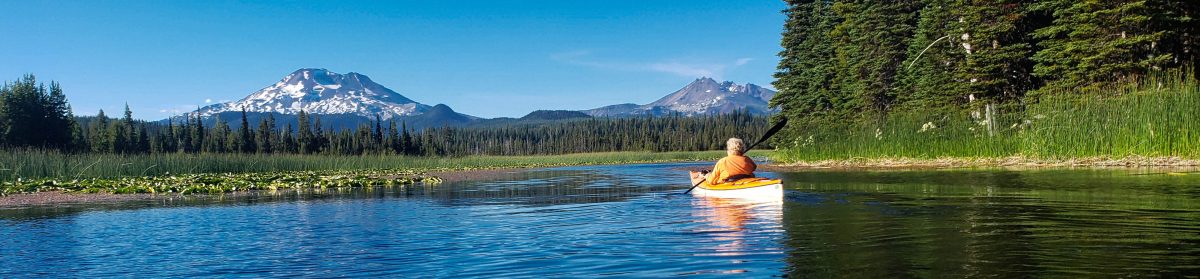
Waking early Wednesday morning, I looked out over Medicine Lake, smooth as silk, without a ripple anywhere. 

quiet morning at 41 degrees and no windThe skies were clear and only a faint bit of smoke remained on the eastern horizon.  Our days of doing nothing were about to begin with a meandering 3.5 mile loop around the perimeter of the lake.

CaptureOur campground site is at the upper mid right of the map above, the swimming beach is the far right marker, the best fishing hole is on the lower left on the lake and the Brownell Cabin in on the lower bottom left on the shore.  The good bike trail goes to Little Medicine Lake on the upper left shore.  Somehow slipping into a kayak in the early morning feels like nothing at all, no effort, just a silky glide across water so clear I can count fish and silence only broken by the cry of ospreys. Mo on the morning miasma at Medicine Lake

I don’t know how long we were out there that first morning, maybe a couple of hours, but by the time we returned to camp the wind had picked up a bit and the smoke was disappearing completely.  The day began with french press coffee and tiny donuts before we went out on the water and waiting for a mid morning hearty brunch seems to work best for us on this kind of trip.  toward the meadow on a perfectly still morning on Medicine Lake

The day would have continued without much fanfare, but as we settled onto the beach for a bit of sunny doing more nothing, our neighbor approached us all full of conversation and questions.  She wanted to know where we were from, where we got our kayaks, and if we wanted to join up with their kayaking group from the Medford area.  Martha was a very gregarious, talkative, and friendly woman and by the time she left, we had exchanged emails and had plans to contact each other for a day on Recreation Creek. 

we just rolled the trailer down the hill by hand from 45 to 43Not long after that conversation, she and her friend pulled out of the site just next to us, number 43.  Earlier, when we found out they were moving, I asked Mo if maybe we should relocate, and she said, “No Way!!”  But after they left, and we walked over to the site, the very easy, not steep, and not rocky path directly to the beach from the camp spot changed her mind.  Ok, let’s do it!

site 43 from the back of the MoHoWithin minutes we pulled in the slide and backed the MoHo down the 50 yards or so to the much bigger, much more level, much more private site even closer to the lake.  The funniest part of all was later when I was reviewing my photos, I realized that we had camped in this site back in 2005.  How could I forget?!? Rather than hooking up the trailer, we just rolled it down the hill by hand to the new site, and floated the kayaks over to their new beach..  site 43 in 2013

So much for doing nothing!  After getting all settled in again, I had to run around in a flurry trying to take photos of the new site to remember why we made the move.  It was a great plan and for the next several days we said over and over how happy we were that we didn’t have to get up and down that rocky trail to the beach from 45.  Funny, I think I remember saying yesterday that 45 was such a great site.  Well, it is, but only if you can’t get into 43.

view out the back of the MoHo in our new siteA bit later we were down on the beach again when another woman came up to us asking questions about the boats and our rig.  Seems as though she and her husband were camping and were hoping to eventually retire and buy a small motorhome of some kind.  Before long we discovered that her husband was the base commander at Kingsley Field back in Klamath Falls and she was some kind of retired air force officer who now had three kids.  I swear this woman didn’t look a day over 35.  I guess some people make all the right choices at the right moment.  She talked about her travels in the world, her husband, being active duty parents, and all about how much they loved living in Klamath Falls. People in campgrounds are just so incredibly friendly.

Ansel and Barbara on Medicine LakeIt wasn’t long afterward that another couple moved into our vacated site 45, only they at least were camping with a tent.  Next thing you know, they are coming down the trail asking about the kayaks.  They were from San Francisco, at least that is what they said at first.  When we responded with “Oh, where in San Francisco?” she said, “Pacifica”.  Then when Mo said she had taught in Pacifica for 25 years, they started talking about driving Devils Slide and the new tunnel, and then it came out that they actually live in Montera, just a few blocks away from Mo’s ranch in Montera where she lived for that 25 years while teaching.  We all laughed about how you just say “San Francisco” to folks you assume won’t have a clue where Montera actually is located.  How does that happen anyway? 

It turned out that Barbara and Ansel were a highly entertaining couple, with some crazy quirks and a LOT of stories that they liked to tell with gusto.  They also had a brand new inflatable kayak and were fairly new kayakers and wanted some advice about where to go on the lake.  By this time it was very windy and there was no way anyone was going out on that lake in a kayak.  We knew there was a small window of quiet usually in the morning for silky boating and told them to be up and on the water by 7 if they wanted to take advantage of it.thunderstorms maybe?

We spent the rest of the day doing our usual nothing, which includes some reading, some sitting and watching the sky, throwing balls for Abby in the water, watching the lake, and eating.  We used the Weber Q for our suppers and the days just seemed to run all together.  I had taken the computer with me, thinking that I could at least write for the blog with the inverter or when the generator was on, but sure enough, I had forgotten the plug!  I am having to remember all this several days later since writing with a pencil is something I just can’t seem to do any more at all. I didn’t even take photos for two entire days and the only way to remember what we did is to go back over the photos.

evening at site 43 on Medicine LakeWe kayaked every morning and some evenings, had a big campfire every night where I roasted marshmallows and filled them with little pieces of chocolate that would melt perfectly.  We had great dinners, and wonderful big breakfasts that were closer to lunch and never bothered with lunches the entire time. 

water knotweed polygonum amphibiumWe went for short hikes up to the Glass Flow, rode our bikes up to Little Medicine Lake on the lovely bike trail.  We tried to ride to Arnica Sink on the not so lovely bike trail that was deep sandy pumice mined with fat lava rocks.  We turned around on that one and decided that riding on the road was much more fun. Sue in the knotweed at Medicine Lake

The birds are always a highlight, and after a few mornings I actually recognized the two blue herons that flew from shore to shore.  It is always a decision as to how close to get, with the rule being if the bird is uncomfortable and starts to look nervous, you are too close.  I think I got too close to these herons.  I felt guilty, and then would think, well maybe if I am really slow and still it would be ok, but it wasn’t, they flew away, and dang!  I need a longer lens.blue heron on Medicine Lake

The lake is populated with at least a dozen ospreys, perched on snags on the east and west shorelines and always entertaining with the diving and fishing.  We also saw one bald eagle on the west side one morning, and a couple of red tailed hawks and another hawk that I couldn’t identify.

osprey, one of several patrolling the lake I was surprised to see several vultures as well, as I don’t remember seeing them at this kind of high altitude before.  There was one Great Egret in the meadow on the first morning, too far for a photo, and he wasn’t there again.  Ducks were surprisingly few, with just a little group of young ones without a mother paddling along on the east side of the lake.

Mo and I don’t fish, but we had a great time searching for fish in the clear water, with some great success along the southwest shoreline where one of the springs comes up.  Sometimes we could see six to ten trout, maybe 14 inches or so, swimming around beneath us.  We also love paddling into the knotweed with the happy pink flowers standing up above the water and making for some great photos with my pink kayak.

blue heron high in the treeOn one of our days the winds blew so incredibly hard I decided to spend a large part of the day inside the rig knitting a luscious wrap that I have been working on for much too long. The sound of that wind was fabulous, and the clarity it brought to the sky was breathtaking.  I loved it, even though it made it too wild on the lake to take out the kayaks or try to take a swim.

I completely finished reading a great book about cheese, and Spain, and slow food, and betrayal.  It was written so well that I had to highlight phrase after phrase of beautiful words to remember.  I highly recommend “The Telling Room”, by Michael Paternini.  Reading that makes me feel like I have read something worthwhile is great. We even had time for watching a couple of movies in the evenings, with the inverter handling it just fine without having to run the generator.  I laugh to remember that we had this rig for several years before we knew it would do that. 

Finally on our second to the last day, the wind died down completely, and I managed to slip into that crystalline water for a great swim.  Cold, but great.  Barbara and Ansel came down the hill to join me, but neither one of them could manage to get all the way in.  I probably wouldn’t have stayed in as long as I did if I hadn’t been trying to convince them to swim with me.  The day heated up beautifully, but with the warmer temperatures and no winds, before long there was a bit of smoke in the air again.  Nothing like Grants Pass a couple of weeks ago, but smoke nonetheless.

Mama heading for the salt lick on the Brownell ranch with Richard coming to say hello to usOn our last morning kayak, we took our slow time meandering around the lake.  While admiring the old historic cabin on the southwest shore, the owner came down to the shore to visit with us.  I must say I haven’t had such a busy social life in a very long time!  He regaled us with stories about the cabin, built in 1928 by his wife’s father who saved the life of the original owner of the property.  When asked what he would like in return for saving his life, the man said, “If you ever sell the property, sell it to me”.  Sure enough that is how he got it.  Now there are three sisters who share the space with extended family who have memories of staying there as girls in the 1940’s.  They live there 3 months out of the year and then return to Morro Bay in California.  Mo on Medicine Lake

He told us that  the first trout were brought to the lake on mules in 1880 and by the 40’s there were huge browns in that lake that the girls remember catching.  In the 60’s however, chubs were winning, and the Fish and Game decided to kill the lake and start over.  Now the fish that are planted each spring are fairly well fished out of the lake with no big old boys left.  The deepest hole in the lake is about 150 feet, but the rest of the lake is quite shallow.  It was great to get local stories from the local folks.  He even said we were welcome to hike up behind his place to Brownell Meadows but we will have to wait for the next trip to take him up on the offer.  Besides, this was the camping trip for doing nothing and we were getting a bit carried away with all the somethings that we were doing.sunset at Medicine Lake

When it was time to leave, once more the campground was very nearly empty, with only a few occupied sites even over in the busy Medicine Campground.  Our Hogue camp was almost completely empty.  How often can you find an empty campground on a lovely lake in the middle of August!?! We read on the campground sign that there was an RV dump nearby but turned the wrong direction and ended up going south on 49 instead of where we were supposed to go.  As many times as we have been to Medicine Lake, I still needed to get out the map to be sure we were on the right road heading home.sunset at Medicine Lake

Down from the Highlands, summer set in again, with temperatures rising ten degrees in as many miles and smoke thickening the air as we approached Klamath Falls.  bummer.  At least we got a nice break from it, and Rocky Point has enough thick forest to help oxygenate the air a bit.  I just read that Janna and Mike tried to see Crater Lake this week.  Such a bummer and bad timing.  I an only imagine how disappointing it must be for folks who travel from all over the world to see the beautiful lake and its gorgeous blue.  Ah well, Medicine Lake isn’t quite as blue, or as big, or as dramatic, but it was lovely and perfect and I am so glad that after five years we finally took our Medicine.


Medicine, or dropping off the grid into a Volcano

Medicine is a word of several meanings.  As in, Take Your Medicine, or more beautifully, This Place Has Powerful Medicine.  Medicine Lake is named for the second meaning, the sacred meaning, but the two seem to overlap here in the deeper meaning of healing, either body or spirit, and of course, both are connected.morning miasma on Medicine Lake

Medicine Lake is a small lake in the bottom of a 4 by 7 mile caldera on the Medicine Lake Highlands near the Northern California border.  This sweet little lake is just a couple hours drive from Klamath Falls, and yet I don’t often hear of people from Klamath traveling here. Most of the license plates are from California, with folks driving up the nice paved two lane road from Mt Shasta.  It is a bit of a drive, off the grid entirely, so perhaps that accounts for the open campsites and quiet lake. 


evening play on the beach at Medicine LakeThere are no hookups here, no cell phone service, water in the campground but not at the sites.  We came ready to boondock for six days, with a full tank of fresh water and empty waste tanks.  Generator use is allowed in the campground from 8 in the morning to 10 at night, but we tried to be considerate and except for one early evening movie when the campground was nearly empty, we only ran the generator for an hour or so in the morning to keep up the charge.  We were careful and when we left, our tanks still had plenty of room to take on the extra six gallons of water we added with jugs and a funnel.  Mo has a small solar panel and although it doesn’t support heavy use, it does keep the charge up throughout the day.We unhooked the trailer to slip it into the parking area next to the MoHo

Medicine Lake Highlands has the distinction of being the largest volcano in the Cascades and the largest volcano in California.  Unlike the dramatic peaks we are all so familiar with, Shasta, Lassen, Mt Hood and others, this volcano is a broad volcano with dacite and rhyolite lava and obsidian flows as recent as 1000 years ago spreading from the shield volcano for more than 30 miles in every direction.  From Klamath Falls, the Highlands can be seen in the distance to the south, unassuming, appearing as a nondescript broad plateau.  Medicine Lake Camping (2)-032

Medicine Lake Highland’s volcanic area exceeds 200 square miles in Modoc and Siskiyou counties and encompasses portions of three National Forests including Modoc, Klamath and Shasta-Trinity. Over the last half-million years, volcanic eruptions on the Medicine Lake shield volcano have created a rugged landscape dotted with diverse volcanic features including more than 700 lava tube caves. Some of the most popular features include Glass Mountain, Burnt Lava Flow, Medicine Lake Glass Flow and Undertakers Crater. Medicine Lake has no known outlets yet the water remains clean and clear with inflows only from snowmelt, rainfall and springs.

Medicine Lake mapDriving south from Klamath Falls through Merrill, home of one of the best quilt shops in Oregon, Tater Patch, we continued into California on Highway 39 to Alturas, turning west toward Tionesta 40 miles or so south of Tulelake.  The road to Medicine Lake is well marked, but narrow, paved but very rough.  Abby and Jeremy complained quite a bit about the thumping, bumping rough sounds of the regular seams across the road.  I guess they are created to prevent frost heave on a road crossing soils thick with pumice deposits.take off blue heron on Medicine Lake

The road rises over 20 miles or so from the juniper sage desert at 3900 feet to high red fir and lodgepole pine forests at nearly 7000 feet elevation.  We watched the temperatures drop from the mid 90’s to the high 70’s as we drove.  The skies were clear and gorgeous, with just a bit of smoke from the California fires marring the blue.  In the past few years, we have planned trips to Medicine Lake, changing our mind at the last minute because of fires and smoke.  This time we decided to go anyway, because fires and smoke in the west seem to be a constant and if we wait for no fires, we may never get back to this favorite little place.Mo on the beach at Medicine Lake

We decided to skip the tow car on this trip, instead hauling the boats and bikes in a small trailer.  We have traveled here several times, and spent days wandering the forest service roads exploring lava flows, obsidian flows, and taken in the views from the high mountain fire lookouts.  This time we intended to relax completely.  Without the car, we wouldn’t be tempted to wander any farther than we could go on a bike or our own two feet.  camping kitty

We arrived on a Tuesday afternoon, to find one of our favorite sites wide open.  There are three main campgrounds at Medicine Lake, with the first one a bit more open and a sign says not suited to larger rigs.  We aren’t quite sure what that means, because the sites are quite large, but the road is narrow.  The sites are also not even close to level.  We could camp there in a pinch, but the second campground, Hogue, is our favorite.  There are a few sites in the upper part that can accommodate bigger rigs, but our favorites down by the lake are a bit small and not level.  Medicine campground is the third one in, usually busier with lots of room for larger rigs.  The Headquarters campground is farther west on the gravel road beyond Little Medicine Lake, and is very quiet, open and usually empty because it is a bit of a distance from the lake with no lake views.  Another place that would do in a pinch if you drove a long distance to camp and there are no reservations here.

Our site 45 has a gorgeous view of the lake, a nice big picnic table down the slope from the rig, and for some reason there are two additional rock firepits added to the big one that was here when we camped last in 2008.  A rocky trail leads down to the water and with a bit of maneuvering, we got the boats down to the shore where we could leave them safely for the duration of our visit.site 45 overlooking Medicine Lake

We settled in for a great afternoon of watching the water, watching the sky, playing cards, and I brought out a decidedly sinful and delicious supper of old fashioned hot dogs, baked beans and potato salad that I made the day before at home.  The site has only a small drawback.  It really is a bit more suited to tent camping than a rig, but we managed to get the MoHo leveled and pulled in far enough that the back end was off the camp road.  It is times like these that we are grateful for our perfect length of 26 feet.  We can fit most anywhere and yet still have enough room to travel comfortably for weeks or months.not bad.  Site 45 snagged on a Tuesday afternoon in August

Our sleeping area looked out over the camp road, but there was no one in the site across from us, and the road was quiet, so it wasn’t a serious problem.  The night was completely silent, the moon was low and reflected on the lake and the stars were brilliant.  I wondered momentarily about the next several days.  No internet, no phone, no car.  Just a book, a boat, a bike, and a chair.  Ahhhhhhhhh.first night supper at Medicine Lake  Yum!

Next: kayaking, birds, and social life at Medicine Lake

Mammoth and Mono and Snow Monday May 6

view toward the John Muir Wilderness It was cool enough in Bishop that we were glad for electric hookups so that we could take the morning chill off the MoHo with our little electric heater.  The big furnace is almost as loud as the air conditioner, and I would much rather use free shore power for a little heat than listen to that thing burn up costly propane.  The weather was considerably different than what we had left behind in Death Valley as we continued north on 395. 

map There is just so much to see in such a short distance, but the fact that the morning was cloudy, chilly, and blustery made the little side roads a bit less inviting.  We decided to skip the 6 mile backtrack for another trip to Eric Schat’s Bakkery and packed up and continued on north towards Mammoth Lakes. I had never been into the town itself, the famous ski mountain and summer mountain bike destination is a mecca for all things skiing and biking. 

Mammoth Mountain also happens to be the very heart of the Long Valley Caldera, source of that huge volcanic blast that went as far as Nebraska.  For years I have followed the USGS monitoring of this site.  I was close enough to Mt St Helens when she blew that I was buried in volcanic ash and trapped in Moscow, Idaho for three days.  The fact that it was my wedding day and I had a houseful of people made it all that much more exciting.  Imagine a honeymoon with all three of my teenaged girls, my foster mother, my best friend, and assorted other friends who couldn’t get out of town because the ash was choking all the auto transmissions. 

lifts running at Mammoth Mountain in May Volcanoes and earthquakes are fun to study, although maybe not from such close quarters.  I also live now in the shadow of Crater Lake, another huge caldera responsible for a massive eruption, and Shasta, the sleeping giant, is visible from the road south of our home.  I love following the earthquake and volcano sites and seeing just how restless our earth can be.  So traveling around inside the perimeter of the Long Valley Caldera is exciting.

earthquake fault trail, and yes, it is snowingAs we approached the city center of Mammoth, we stopped at the big beautiful visitor center.  The complex was beautiful with lots of interpretive signs about the caldera, Mammoth Mountain, and Mammoth Lakes, the local flora and fauna, and the restless earth.  Inside the center was a live display of current earthquake activity and interesting discussions of the history of movement in the area.  There are CO2 emissions from some part of the mountain that are dangerous enough to cause the trees to die off, and to elicit a warning about CO2 poisoning concerns for humans in that area.  Magma is rising and the earth is bulging.  Cool

earthquake fault trail, and yes, it is snowing Speaking of cool, by the time we found the Earthquake Fault Trail, it was snowing lightly.  The trail isn’t officially open, so the signs mentioned on the web site are not yet in place, but with the help of the iPhone, we found what looked like the right road.  Amazing that I had a 5 bar LTE signal up there at Mammoth.  I guess rich kids with snowboards require good phone reception.

The “fault” isn’t really a fault, but a fissure from fairly recent volcanic activity.  Some of the earth failures seemed to be even more recent than the 700 years or so mentioned on the sign because the fence posts had fallen in with some land failure and there was a more recent fence keeping folks away from the edge of the fissure.  It was a great little walk, just 1/4 mile or so to the fissure and then some rudimentary steps and a trail around the edge.

earthquake fault trail, and yes, it is snowing We drove up to the main ski lodge at Mammoth Mountain surprised to discover the lifts still operating and people skiing.  Amazing.  My nose was still in nosebleed mode from 104 temperatures and no humidity.  California is truly an amazing state and you can find just about anything you want within a few hours drive. 

Back in town we were delighted to discover another Schat’s Bakkery, although this one wasn’t Eric Schats Bakkery, but just Schat’s Bakkery.  Either way, the Sheepherder bread was there and the tiny difference was that Eric’s bread had olive oil in it and this bakery did not use oil in their bread.  Seems as though the Schat’s had a divorce and this was the wife’s establishment.  We had soup and bread in the small eatery attached to the bakery, bought a couple more pastries for the road and another loaf of that famous bread.  The soup was utterly fantastic, tomato basil and turkey vegetable.  The tomato soup appeared as if it had been made from a luscious medley of roasted veggies and ripe tomatoes.  Yum. 

the visitor center It was raining fairly hard when we got back to the MoHo where we left her near the Hot Springs Geologic Site.  We didn’t take time to drive out to the springs, but did see the steam from what is now a large geothermal generating plant.  At one time Native Americans used these springs, then several different kinds of spas and hotels were there until the geothermal plant took over in 1983.  Did I mention magma rising?  Yup!

Continuing north along the highway toward our evening destination of Topaz Lake, we were happy that this time the Mono Lake Visitor Center would be open.  The center is closed on Tuesday and Wednesday, so we had missed it on our way down.  This visitor center is an absolute, without a doubt, must see requirement if you are on Highway 395 near Lee Vining.  Lee Vining is the tiny town where the Tioga Pass Road climbs the east side of the Sierras into Yosemite, still closed this time of year.  The sun even cooperated as Mono Lake came into view, slipping out of the clouds just enough to make the skies interesting.

I love these maps, and this one even has pictures that light up with the buttons The building is beautiful from the outside, with beautiful xeriscaping (landscaping using drought tolerant plants), a lovely interpretive nature hike, and beautiful views of the desert and the lake.  As I walked through the entrance, the interior took my breath away.  The center is architecturally beautiful and the exhibits are truly wonderful.  The very best part for me is that I learned something completely new.  You have probably seen photos of the amazing tufa pillars at Mono Lake before.  There is a certain volcanic rock called “tuff”, and I had no clue that “tufa” and “tuff” are not synonymous.  In the center are some informative displays of how tufa is formed under the surface of the extremely alkaline lake water where calcium rich spring waters emerge into the lake.  These tufa pillars are then exposed as the lake level has receded. Mono Lake is a must return site, only next time with our kayaks.  I really want to paddle around those tufa towers at the southern end of the lake, even if it means getting our boats all salty and in desperate need of a good rinse.

lighting jup the bird migrations at Mono LakeIn addition to the natural history of the lake, the center explains the recent human history of the water wars surrounding this magnificently beautiful high desert lake.  Once again, water was removed to feed the hungry masses in LA and it was only in the last few decades that a group was formed to try to save Mono Lake from complete ruin.  The displays at the visitor center explain this controversy clearly and beautifully, and as yet the problem has not been solved.

Living in the Klamath Basin as I do, where these kinds of water issues are at the heart of our culture, I so wished for a beautiful, informative visitor center like this one for the Basin.  The Mono visitor center was an Inyo National Forest facility, but I couldn’t help but wonder how such a state of the art, creative and informative facility was funded.  We stayed a long time, perusing every exhibit and taking our time to walk the pathways.

Mono Lake from the visitor centerI was shocked to realize that it was 3:30 in the afternoon when we finally left and as yet we hadn’t decided for sure on where we wanted to spend the night.  Snow flurries and white on the mountains all around us precluded a boondocking night and instead we decided to forge on north toward Topaz and the Topaz Lake Casino. 

We passed the road to Bodie, (which was surprisingly open already), Dogtown, Bridgeport, the beautiful campsites along the Walker River.  A little roadside stop in Bridgeport gave us enough internet to do a bit of research and discover that the Topaz Lake Casino had full hookup, pull through sites for $20.  per night.  Not bad!, and even though the rain was getting heavier and the skies darker all the time, we made it to Topaz.  For once, the weather gods weren’t with us, and Mo set up in the pouring rain while I walked in the pouring rain to secure the last pull through site available.  We were both pretty wet by the time it got dark, but after a bit of relaxation with 88 tv channels and the heater going, we decided to go to the casino and take advantage of our free drink coupons.

Day 9 DV to Bish_070DSC_0083 Most of the time we can pass up the gambling, but every now and then we will donate 20 bucks each to whatever tribe is trying to make a living.  It took us a few minutes to realize that we were actually in Nevada and weren’t donating to any tribe at all except the rich state of Nevada.  Oh well, Nevada has better pavement than just about any state out west, so I guess it is worth it.  It was also more fun than usual because I won 50 bucks, leaving the casino with $40 instead of the $20 I had walked in with, including the free drink! There isn’t a level site to be found in that place, but it still is a definite stopover on 395 if you want to save a little money.  They have spaghetti for 3.99 and biscuits and gravy for 1.99, neither of which was on our radar at the moment, but still good to know.

Sonora Pass is now closed againBy morning, the rain had lifted and the skies were only a bit cloudy as Mo negotiated the urban interface where 395 passes through Minden and east of Carson City, through the Reno interchanges and on north toward Susanville.  There is so very much to see on this route as well, but we were ready to be home, and like a couple of barn sour horses, we just drove and drove all the way to Klamath Falls.  I was missing my cat big time, and it was with great delight that I picked him up at the vet, where he gave me a good scolding and snuggled up to my chest like glue.

We stopped at the Moore Park RV dump site, which was thankfully open, flushed our tanks and then headed around the beautiful Klamath Lake, over Doak Mountain, and pulled into the driveway at Rocky Point in late afternoon.  It was good to be home again in the forest.

Sunrise~Sunset~Sunrise~Sunset….Swiftly Go the Days…Saturday May 4

Day 7 D Valley_051DSC_0051 Many of the more well known sites in Death Valley are around the Furnace Creek area, where we finally managed to work up the nerve to leave the swimming pool and air conditioned MoHo to venture out into the heat.  By 5pm it was only 96F or so, and even with the air going full blast, the inside of the MoHo was at 86F, cooling from the afternoon interior high of 91.  Yeah, we are only 30 amps in the MoHo, nice when trying to find a spot to hook up in remote areas, but not as good as those big 50 amp rigs with two air conditioners in hot country.  Getting outside and into the Tracker was a test in endurance until the air conditioning in the car finally caught up.

Day 7 D Valley_020DSC_0020 We only had a short mile to the Old Borax Mine works just north of the ranch.  Even though I had been to Death Valley before, I was surprised to be reminded that the famous 20 mule team borax wagons only operated out of the valley for 5 short years.  We drove through Mustard Canyon, but the overcast skies muddied up the mustard yellow color of the Furnace Creek Formation mud and silt left over from the 3 million year old lake sediments. 

Day 7 D Valley_013DSC_0013 Of course, we had read the memo, and knew that sunset would be a great time to drive the 27 miles to Dante’s View.  As we continued south past Zabriski Point toward Dante’s View, we took the one way side road into 20 Mule Team Canyon. It was just a short 5 mile loop, but incredibly fascinating to see the old sediments and the beautiful colors against the darkening skies. The storm looked like it could really do some damage, in spite of the fact that the valley only gets 2 inches of rain annual at the most.

Day 7 D Valley_034DSC_0034 Along the way south to the view point we passed huge open pit mines that were just outside the boundary of the park.  On the narrow road we kept seeing signs saying “no trailers allowed” and then a few miles in, there would be more signs proclaiming “trailer parking”.  Sure enough, at the top of the very narrow winding road, we saw a motorhome.  It was a small one, a rental of course, but still the sign DID say no motorhomes or trailers.

Day 7 D Valley_070DSC_0070 We read the memo about sunset, but neglected to remember that we were again traveling from below sea level to more than 5,000 feet elevation.  Hmmm.  We are in sea level clothes at cloudy high mountain temperatures.  We weren’t the only ones at least.  There were some carloads of hardy souls waiting for the sunset, and some of them even had the foresight to bring along some fleece.  Not us.  The wind was blowing hard, the skies were dull and smoky from the huge Camarillo fires, and it was cloudy.  The most fun was watching the sunset watchers.  Several carloads gave up and left, but there was this thin line of clarity just over the mountains to the west that made me think that something wonderful might happen if we were patient enough.

Day 7 D Valley_074DSC_0074 It did.  It wasn’t what I would call a spectacular sunset, but it certainly was a magical one.  We watched the glowing red orb appear in the opening in the clouds as it dropped toward the mountain and then something funny started happening.  As we watched, a thick, black, solid image appeared on the lower part of the sun.  It didn’t look anything like a cloud, but something was definitely in the sky there between us and the sun that was really cool.  Looked kinda like a coyote sun to me.  It was worth the wait to then watch the clouds along the mountain horizon light up as though they were rimmed with Christmas lights.  Maybe not whole sky spectacular like some sunsets I have seen, but definitely different and definitely amazing.

Day 7 D Valley_091DSC_0091 We slept well considering the heat, and again the air conditioner ran all night with lows in the mid 70’s.  The pre-dawn alarm was set and woke us to skies that were still a bit gloomy, but the eastern horizon looked as though light might find a way through.  Zabriski Point is one of the more famous viewpoints in the park, the one closest to the Furnace Creek Inn where people have come to marvel at the desert since the early part of the last century.  Now the parking lot is down low and you must walk to the viewpoint, but old photos show old cars all lined up there to see the sunrise.  Taking photos of a Zabriski sunrise is probably a requirement for any landscape photography course.

Day 7 D Valley_109DSC_0109 Once again it was fun watching the watchers.  It tickled both of us to see all the different morning bed hair, on both men and women.  Some people even hauled chairs and thermoses of coffee to wait for the light.  Of course there were lots of cameras, lots of languages being spoken, and lots of tripods.  I didn’t have mine, and instead used the interpretive signs as a makeshift tripod.  Next to me, however, was a photographer.  In capital letters.  He had some kind of large format camera, the kind that always excites me and yet is so intimidating.  I don’t even know if these cameras still use film, but I assume so.  Do they have large format digital cameras now?  It looked like a Hasselblad 4×5, the coveted camera of my university photography classes.  I have no clue what they cost now. 

Day 8 D Valley_005DSC_0005 I wanted to pick his brain but he was concentrating of course, using meters and such, and taking lots of prep photos as he waited for the light.  I’ll bet his photos are better than mine, but a lot more expensive as well!  I had fun fooling with exposures, and did a lot of really slow shutter speeds playing with the light. 

Day 8 D Valley_040DSC_0040 Once again, as the light brightened and flattened out the shadows, it was time to return to the MoHo for a nice breakfast and a long, lazy swim in that fabulous pool before we checked out at noon to leave the valley.  We will definitely go back, I am sure, probably a bit earlier in the season, however.  Our drive north was a return over the two big grades that we drove in on, and we both agreed it would be a lot easier to just unhook the Tracker.  We unhooked in Stovepipe Wells and ground our way up the hills.  I drove the MoHo and Mo followed in the Tracker.  The ups were definitely not as scary as the downs.  I had to put it in 2nd because the automatic downshift just didn’t go low enough on the long 9 percent grade dropping into the Panamint Valley.

Day 8 D Valley_055DSC_0055 We hooked up again at the top of the grade, a few miles east of highway 136, still a bit dicey but nothing we weren’t used to traveling in the MoHo hauling the Tracker. The skies were cloudy and as we left the valley the temperatures cooled to the 70’s and the winds were getting really strong.  We we descended into the Owens Valley the dust from the dry alkali lakebeds made eerie dust devils and we worried about the paint getting blown of the rig.

Day 8 D Valley_057DSC_0057It was still early when we reached Bishop, and there was plenty of time to take the drive up Sabrina Canyon which we had missed the last time we passed through a few days previous.  The light was opening up a bit, still cloudy, but at least a bit of sunlight to make the mountains glow.  The canyon was lovely, and Bishop Creek has a lot of forest campgrounds along the way.  The creek was full and there were lots of folks fishing.  Once at the dam, we negotiated some construction barriers before rounding the corner to the ‘lake’.

Day 8 D Valley_084DSC_0084 The lake was gone.  We found a huge pile of boulders, lots of sand, and a couple of small puddles where the lake used to be.  The water rights are owned by Southern California Edison Co, and the water goes to LA via the aqueduct along with al the other water in the Owens Valley.  There was a boat launch and resort with private docks, signs saying “keep off dock” and they were about 30 feet in the air, the boats al lined up at the closed resort in the dirt.  There are no plans at this time to refill the lake.  I can’t imagine just how awful this must be for the owners of that lodge, much less the people of Bishop who probably loved the fishing and boating on “their” mountain lake.  It was a dam, and dams are being removed everywhere. I do get that part in some respect, but we can’t undo the damage that we have done by just pulling out the dam.

dust storm at Owens Lake It is a bit like the controversy at Hetch Hetchy.  That valley will never again be the pristine valley that once rivaled Yosemite, even if the dam is removed and the water let out.  Here in the Klamath Basin, we have ‘reclaimed’ wetlands that have been unreclaimed, but they are nothing like the original natural wetland system that was once here.  One of the most controversial proposals in the Klamath Basin is the removal of 4 dams on the Klamath River.  I support that proposal, but looking at Sabrina Lake I can see what a hypocrite I can be as well.  I wish there was still a lake there. 

Sabrina Lake has gone to LAAfter that little disappointing side trip, we arrived at Brown’s Millpond Campground in time to snag the last hookup site. We had unhooked again before driving up to Sabrina Lake, so Mo took the Tracker to get groceries while I took the MoHo to check in and set up.  Once again I ran into some lovely Germans from Munich in a rental rig.  They were very sweet when they came over to ask, “Maybe you know this answer?”.  It seems that they saw the “city water” inlet for shore water and thought it meant water in the city, so they hooked up the water to the sani flush outlet and were in a panic because their toilet was filling up and almost overflowed.  I explained the difference between the two inputs to them as best I could, and once again Stacy at the campground came to the rescue with a bucket and bag saying they could empty bucketfuls from the black tank and dump them in the restroom toilets.

After all was good, they came over to thank me, and brought a big chocolate bar all wrapped up nice.  Ahh, European Chocolate!!!  Yum.  I would imagine that they might have a stash of those bars to thank people that they meet along the way in the twelve week adventure in the United States.  They had traveled from San Francisco to Yosemite and over Donner Pass and were on their way to Nevada and then to Bryce Canyon, but no desire to see Death Valley!Abby wants to know, where is the water, Mom?

Our sunset was accompanied by high wailing winds and wildly bending trees that we ardently hoped wouldn’t fall on the MoHo during the night.

Dawn at the Dunes May 4

Current Location: home in Rocky Point with thunderstorms, sun and rain.  It is good to be home.

dawn at the dunes Escaping the heat isn’t the only reason for rising at dawn when visiting Death Valley.  Reading Galen Rowell’s book, “Mountain Light”, reminds me again and again about that “magic hour” when taking a photo worth remembering is possible.  He said, “I almost never set out to photograph a landscape.  My first thought is always of light”.  In spite of the fact that I am still photographing landscapes, and sometimes photographing in forgettable light because I want to remember where I have been, reading his words has reminded me to at least think of the light more than the “thing” I am trying to photograph.  With that in mind, I set the alarm for 5:30 am, even though I am usually awake by then, I didn’t want to miss the sunrise over the Mesquite Dunes near Stovepipe Wells in Death Valley.

dawn at the dunesWe even skipped a morning beverage, running a quick brush through our hair, and putting on shorts and tank tops to fit the 70 plus degrees outside in the thin light.  The dunes are just a mile from where we were camped, so getting there wasn’t an issue.  The parking lot is big, and in the comparative coolness and lack of sunshine, it was OK to let Abby wait for us while we wandered into the dunes.  The hardest part about visiting a National Park is the lack of dog friendly space. There isn’t anyplace at all where a dog can walk except on the hot barren gravel around the parking lots.  Obviously heat is an issue as well, which is part of the reason we didn’t hike much in Death Valley.  We couldn’t leave Abby in the rig because she would bark and we couldn’t take her on the trails because of the rules, and we couldn’t leave her in the car because of the heat.  A problem. But on this sort of cool morning, she was fine, and although we could hear her barking from the distant dunes, there weren’t enough people yet around for it to be a big problem.

dawn at the dunes  The last time Mo and I climbed these dunes in 2004 it was in the middle of the night to the light of a full moon.  Today we read the interpretive signs warning of sidewinders, and wondered if we had even thought of that danger when we hiked out there in the dark.  The sun wasn’t to rise until just after 7, but there were other folks out there who had also read the memo.  Just about every single brochure about Death Valley talks about getting the best photos at dawn and sunset.  We saw more people on the dunes than we had seen anywhere in the park so far, except for the check-in office in Stovepipe Wells.

dawn at the dunes Another delight of early morning dune walking is discovering all the little tracks of the night animals that live in this amazing environment. We found trails of the kangaroo rat and some other interesting little tracks that I never managed to figure out.  At first we thought they were sidewinder trails, but when we saw photos of the real thing, we knew better.  Hiking in the dunes is a bit like walking on a sandy beach, times ten.  I wouldn’t want to spend a long day trying to go anywhere very distant in this sand.  We laughed a lot just trying to get up on a crest so I could wait for the coming light.  We saw a few hardy souls out on the highest dune, all of 140 feet high.

dawn at the dunes Comparatively, the remote Eureka Sand Dunes rise nearly 700′ from their base and the Panamint Dunes rise 340 feet.  We didn’t manage to get to either of these sand dune fields on this trip, but next time around we plan to drive in from Big Pine on a long northern route that will lead us to the Saline Valley and the Eureka Dunes. I can’t quite imagine climbing a 700 foot sand dune, since I didn’t even manage to get out to the 140 foot dune at Mesquite!  Still, the light was wonderful, and watching the shadows shift and change was beautiful.  Our morning was a quiet one, with no wind and a bit of softness to the light from the filtered haze and smoke sifting into the valley from the Southern California fires.

dawn at the dunes When the sun was high enough to flatten out most of the shadows, we made our way back to the car and Abby.  Just west of Stovepipe Wells is a short  road leading 2.5 miles to a beautiful treasure called Mosaic Canyon.  At the head of the canyon is a day use area, and we knew that Abby couldn’t go there, so we hadn’t made it a priority.  With the cool morning light, however, we thought we should at least go look at it.  There were already a couple of rental RV’s parked there, but signs everywhere saying “no camping”.  Mo said go ahead, and she stayed with Abby while I wandered up the canyon trail for a look at the narrows just 1/4 mile distant. 

Mosaic Canyon in early morning I am so glad I did.  I am a hiker of Utah’s slot canyons, and a lover of slickrock.  Instead of sandstone, though, this canyon is a study in metamorphic rock that has been polished and smoothed by wind and water in much the same way as the red sandstones of Utah.  The canyon narrowed nicely, but not so much that it required moving sideways to get through.  Still, it felt magical and I meandered along climbing slickrock here and there in spite of the silly Keen flip flops I had worn to hike the sand dunes.  They didn’t work quite as well on the polished dolomite stone. 

Mosaic Canyon in early morning After my foray into the canyon, we headed back to camp for a nice breakfast and a bit of reading and photo management before our required 11am departure from the campground.  When we walked outside to disconnect and hook up the Tracker, it was breathtakingly hot.  Maybe only in the high 90’s, but at 10:30 in the morning, believe me, that is breathtaking!

Our move was a short 27 miles south to the Furnace Creek Ranch RV Park where we had made a reservation a few days previous.  The national park campground at Furnace Creek now has 21 hookup sites with electricity and water, but the campground was closed on April 16 for repairs.  Furnace Creek Ranch is quite the establishment, with a gift shop, a general store, a post office, a borax museum, a golf course, palm trees, grass, and water.  And yes, a swimming pool.

By the time we were settled into our site, it was 102 degrees, and the walk to the pool was just long enough to make that water feel fantastic.  The pool at Furnace Creek is fabulous, fed by warm spring water, crystalline and fresh and clear.  Most of the chaises were taken, but we found one to share because I had no desire to come out of the water at all.  It was a perfect way to end a hot afternoon in the hottest place on the planet.  A tidbit: It used to be thought that there was a site in Libya hotter than Death Valley, but it was recently determined that the 136 F temperature recorded there was in error, and the 134 degrees F recorded on July 10, 1913, at Furnace Creek in Death Valley is the hottest recorded temperature on earth.  You might not want to visit in July, although last week we heard the hottest temperature was 110 degrees F and That was in April.